CCTV for shops, retail and F&B
Street shops, mall units, restaurants and convenience stores still have to cover the door, the till, the rear lane and closing time. Cameras belong on trading floor — so you can check who came in, work a stock gap and keep a record. Changing rooms, toilets and directly over seats should not have cameras.
Three jobs the site has to do at once
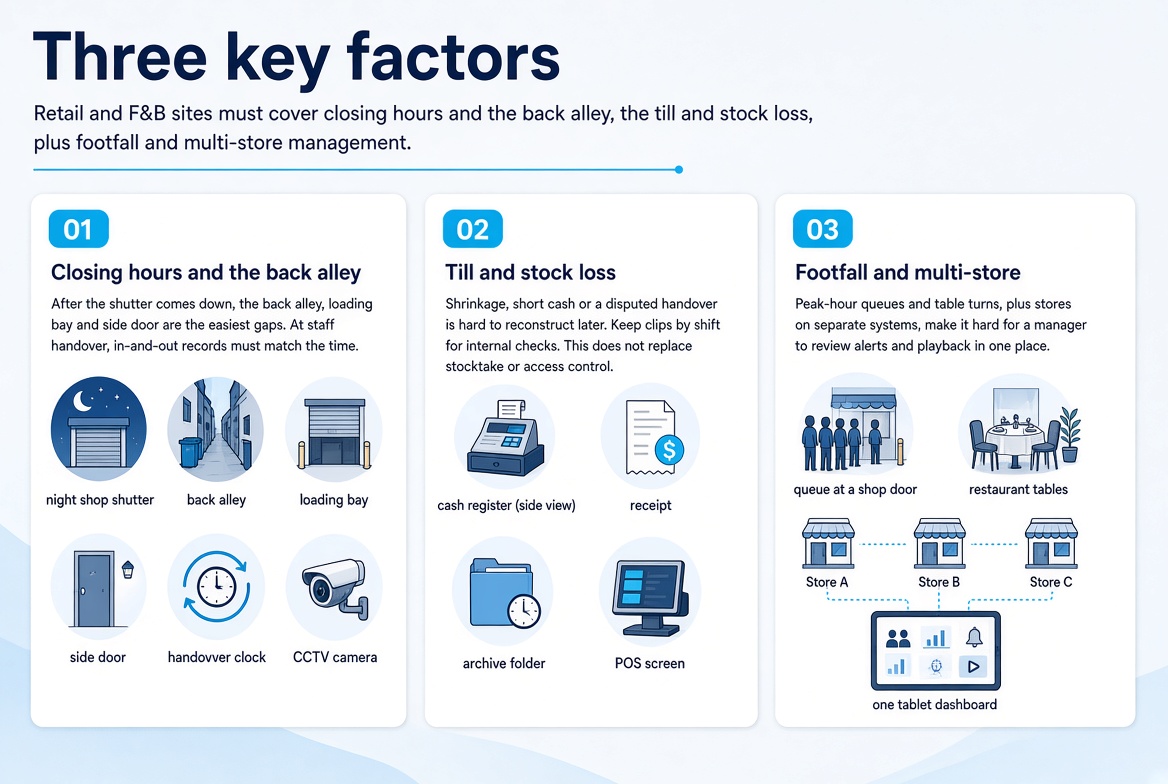
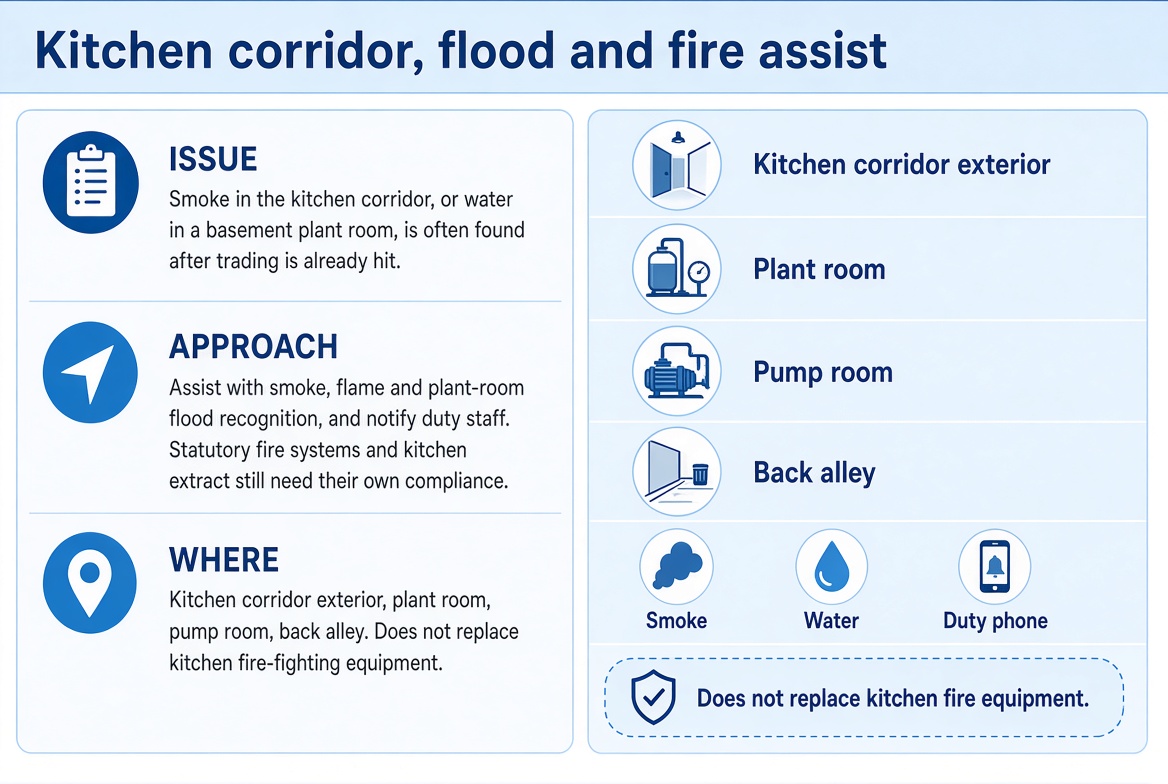
Retail and F&B still have to handle closing and the rear lane, the till and stock gaps, plus footfall and multi-store management.
1. Closing time and the rear lane
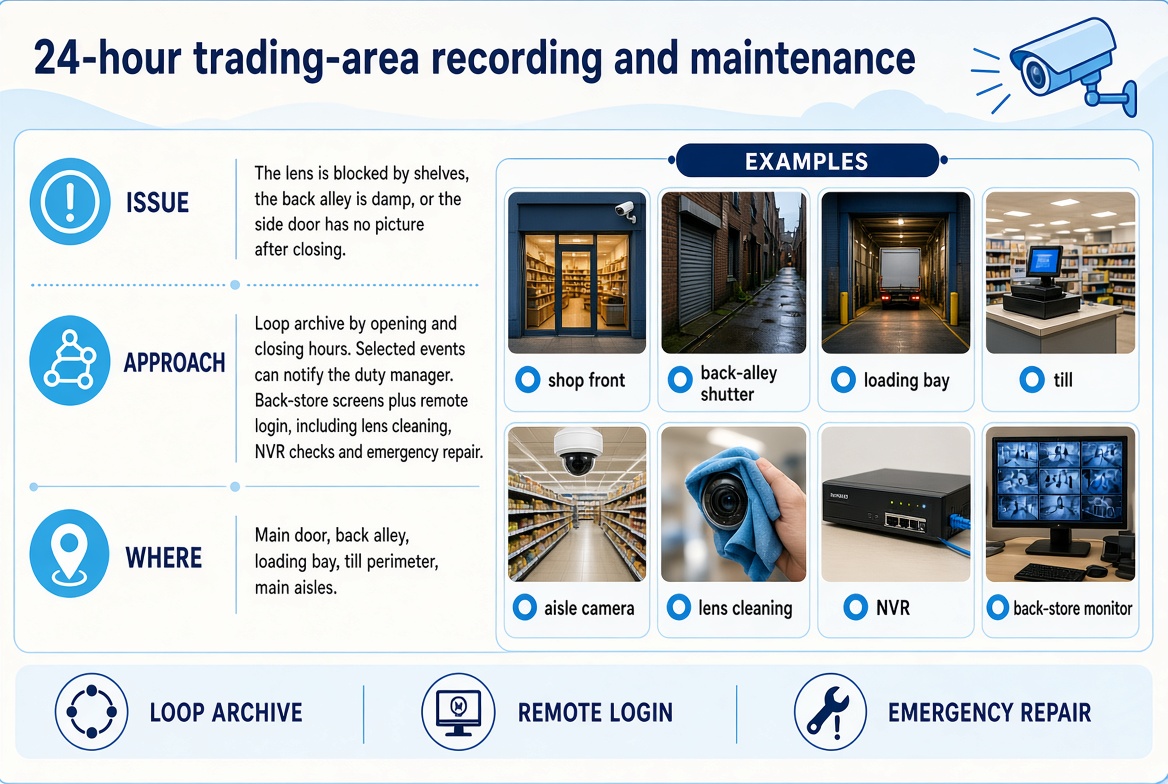
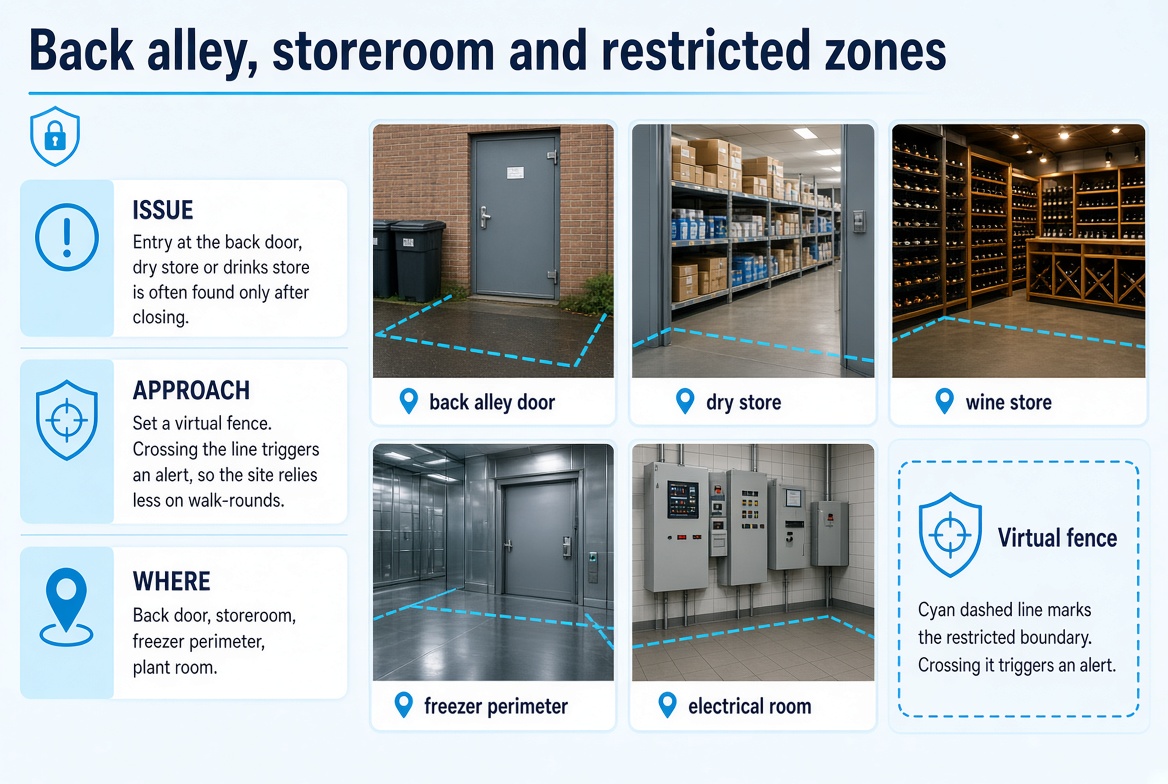
Once the shutter is down, the rear lane, loading bay and side door are the easiest gaps. At handover, the in-and-out record has to match the clock.
2. The till and stock gaps
A shortage, a short till or a shift handover that each side tells differently is hard to reconstruct. Keep clips by shift for internal check. This does not replace stocktake or access rules.
3. Footfall and other stores
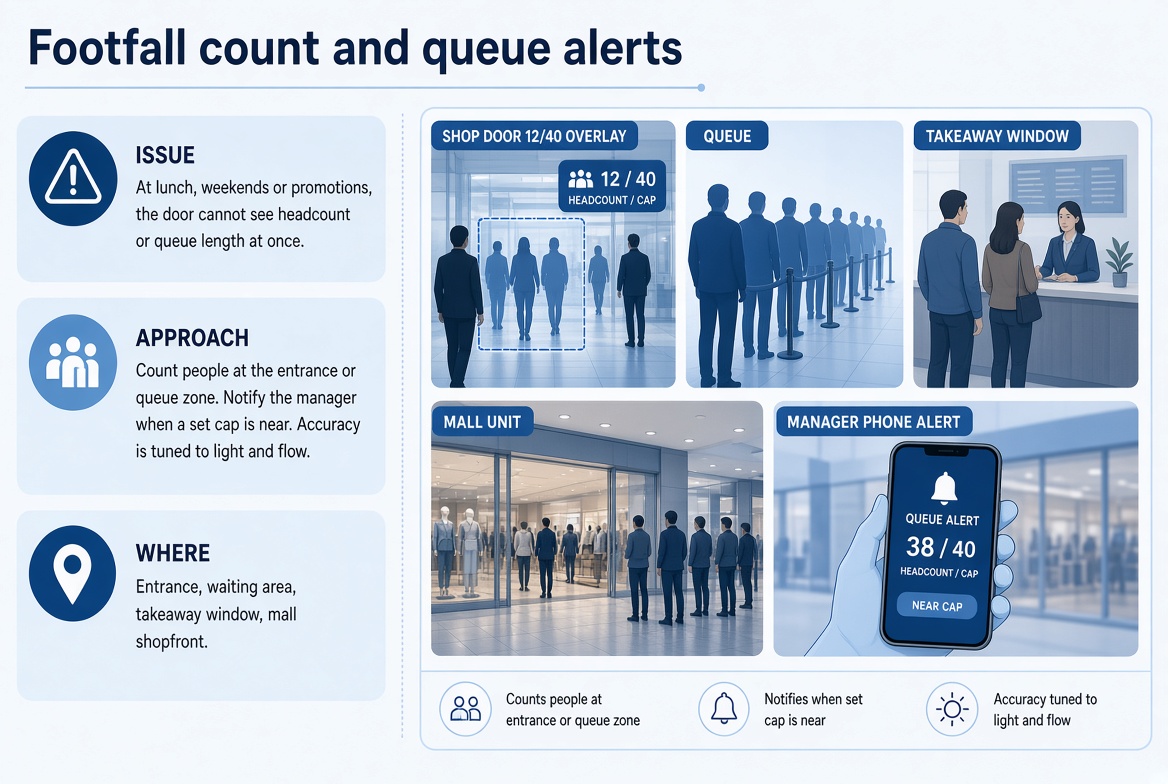
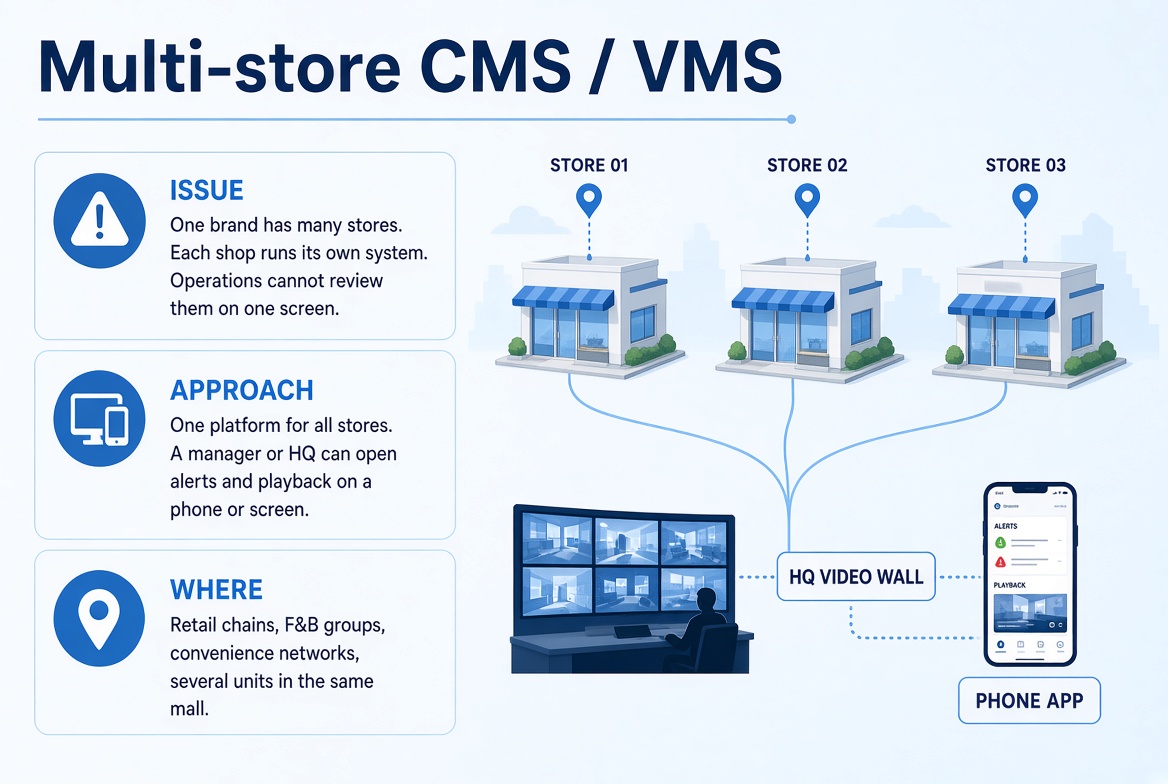
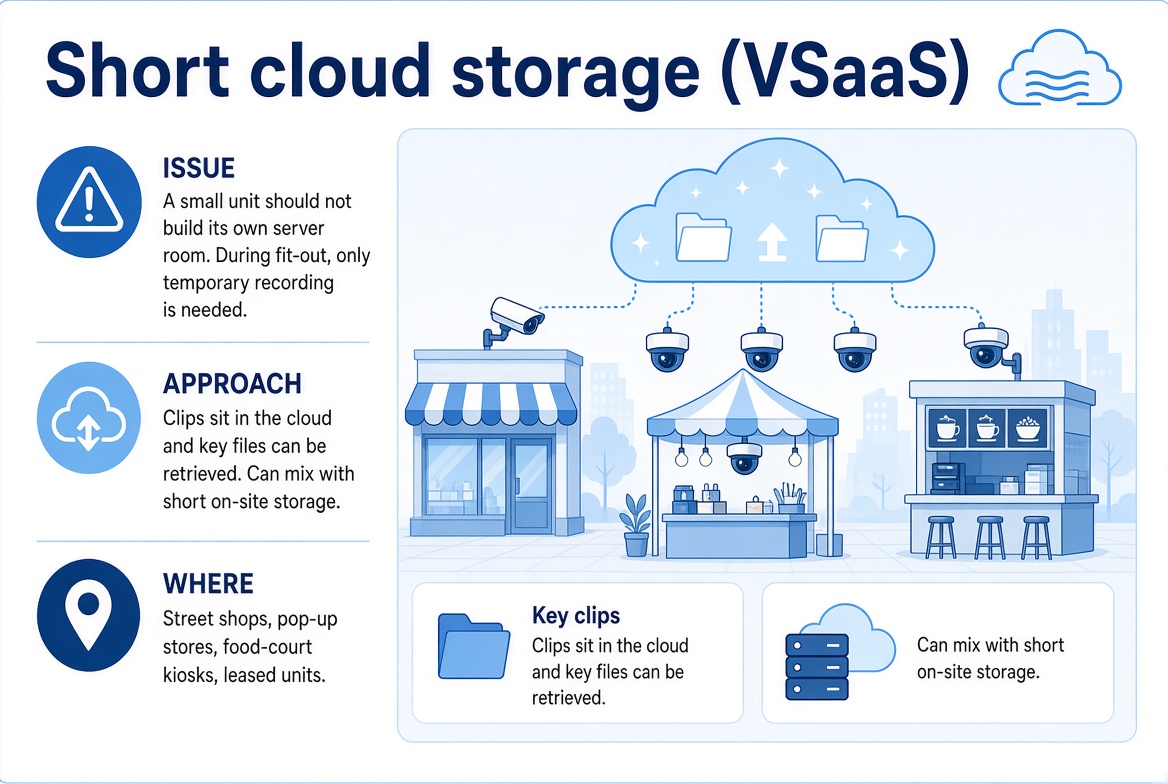
Queues and table turns at peak, plus each store on its own system — the manager cannot review alarms and playback as one picture. A new shop fit-out often cannot get a lump-sum vote either.
One site stack
Trading floor in street shops, mall units, restaurants, cafés, convenience stores and chain outlets.
Sites we can name
| Site | Photo |
|---|---|
| MAISON VALMONT | 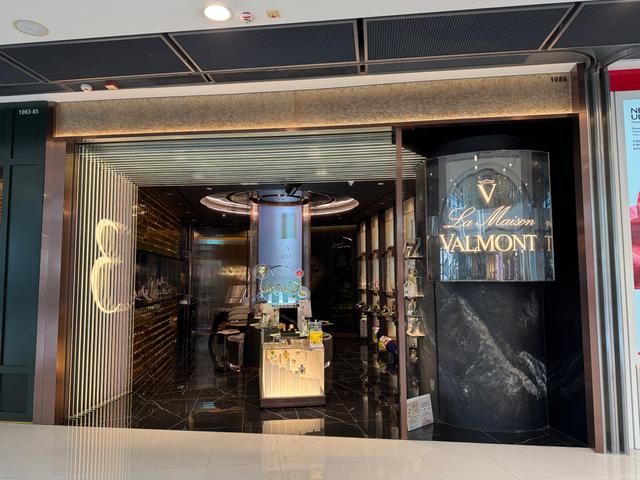 |
| Kee Wah Bakery |  |
| Elegant Laundry | 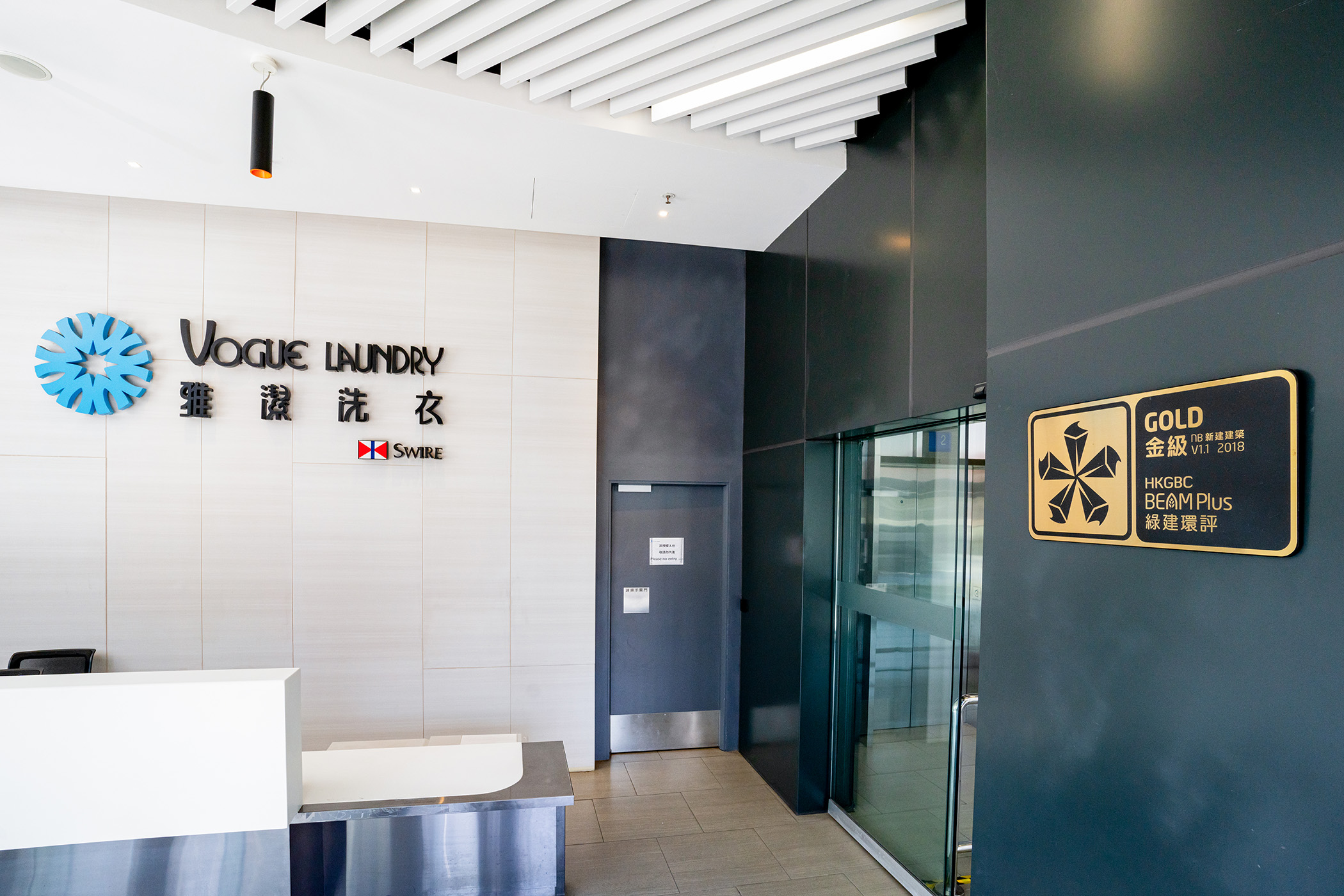 |
Why one team plans it
Trading floor first
Cameras sit on the door, around the till and in the rear lane — not in changing rooms, toilets or staff rest rooms.
Use cameras you already have
We first check whether in-store HD units can stay, then cover blind spots and the recorder.
Add functions as you need them
Footfall, lists, a fence and cloud archive can come in stages. Nothing has to go live all at once.
Local install and upkeep
Works avoid peak trading. Access rights, back-of-house screens and repair stay with the same crew.
How the work runs
1. Site survey
Flow, opening hours, till position and the rear lane
2. Design the mix
By zone: recording only, or add footfall, lists and a fence
3. Install off-peak
Avoid lunch, dinner and stocktake days
4. Train and go live
Manager rights and a run-through of alerts
5. Stay on the job
Clean lenses, update lists, fine-tune detection
Questions shops ask
If the shop has CCTV, how is privacy handled?
The door, around the till, shelf aisles and the rear lane are the right ground. Changing rooms, toilets and staff rest rooms should not have cameras. Audio over seats is advised by zone. We can help with the staff note and the customer notice.
Is footfall counting accurate?
It is tuned to door width, lighting and how people enter and leave. A promotion, or a queue outside the shop, usually needs an extra camera.
Do we have to replace every old camera?
Not usually. Most jobs start by assessing the HD cameras already there, then covering the rear lane, till blind spots and the side door after close.
Our café is only open in the day. Do we still record after close?
You can record only during trading hours, then switch to rear-lane or side-door alerts after close, on a timetable.
Can we do the door and the till first, and add the rear lane later?
Yes. Cover the till and the higher-liability spots first, then add footfall or a face list if you need them.
Can a small street shop pay in instalments?
Yes. Usually 12, 24 or 36 months. Detail is written after the survey.
Book a survey for a shop or restaurant
Tell us whether it is a street shop, a mall unit or a branch — and whether the first gap is the till, the rear lane or closing time.


