CCTV for Outdoor and Remote Areas
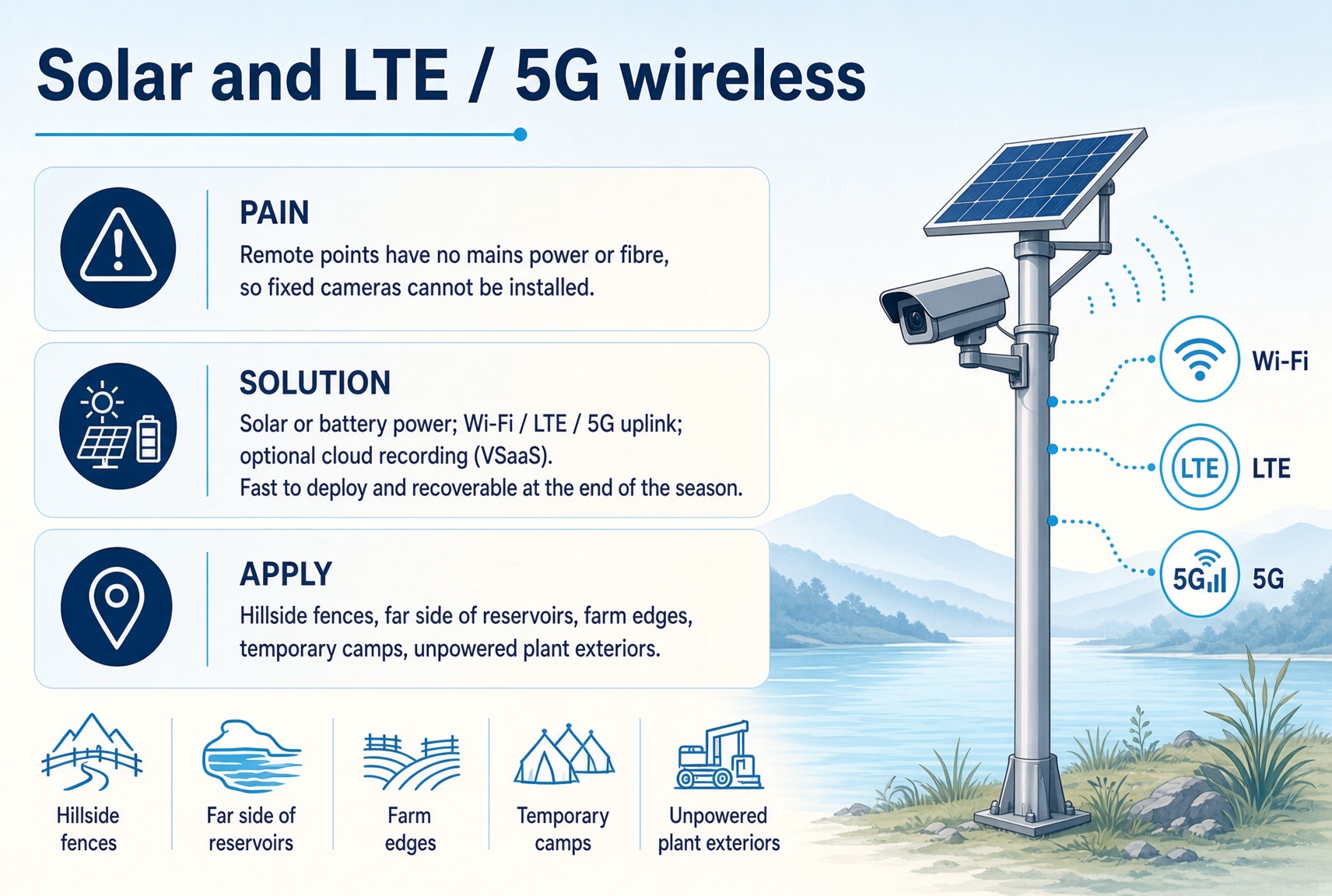
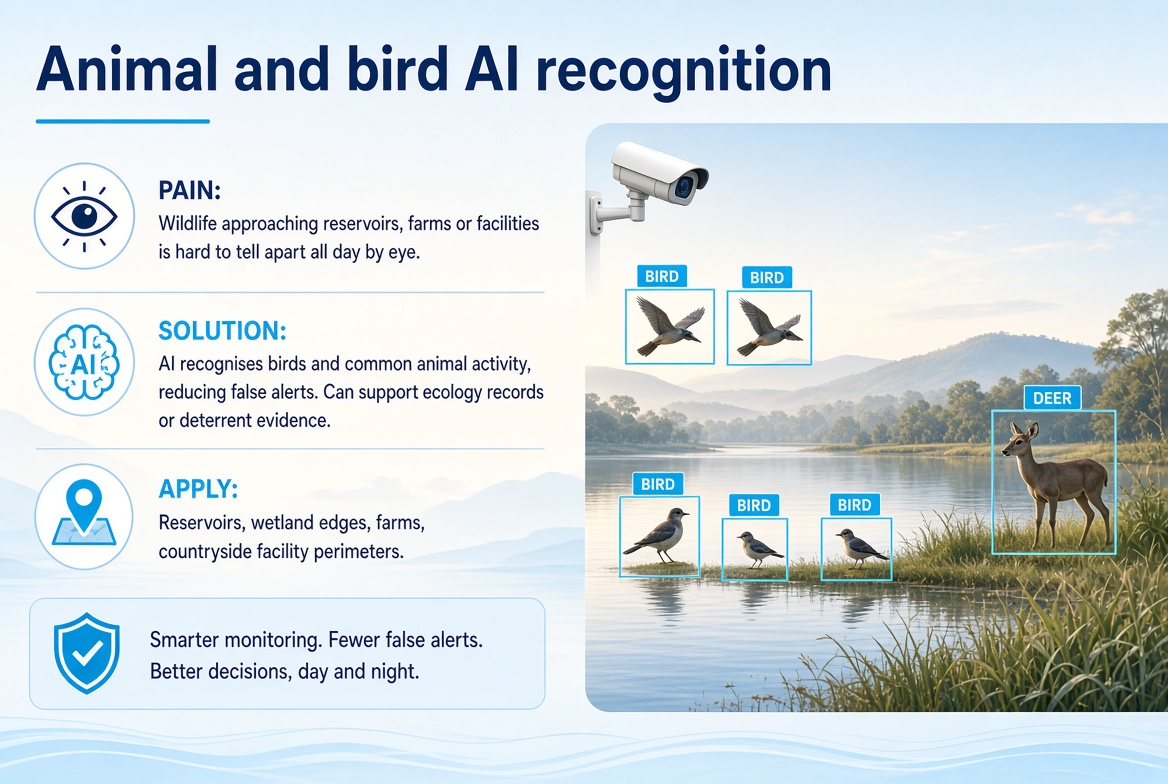
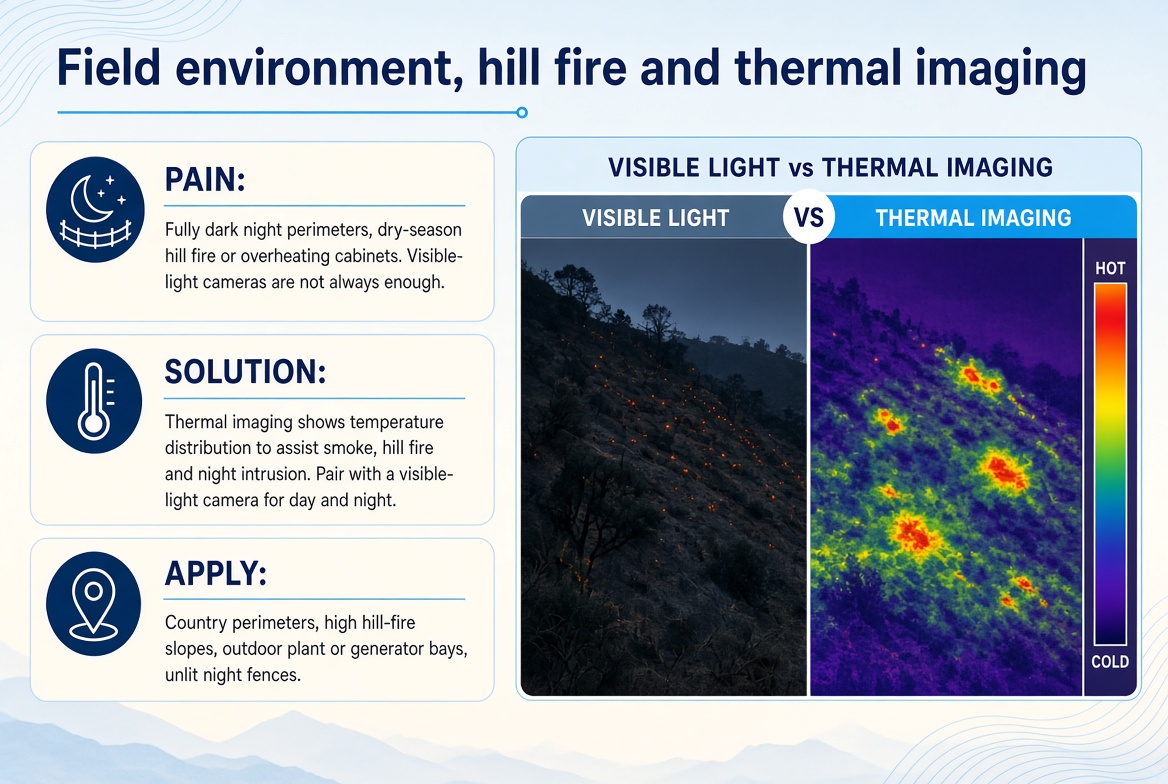
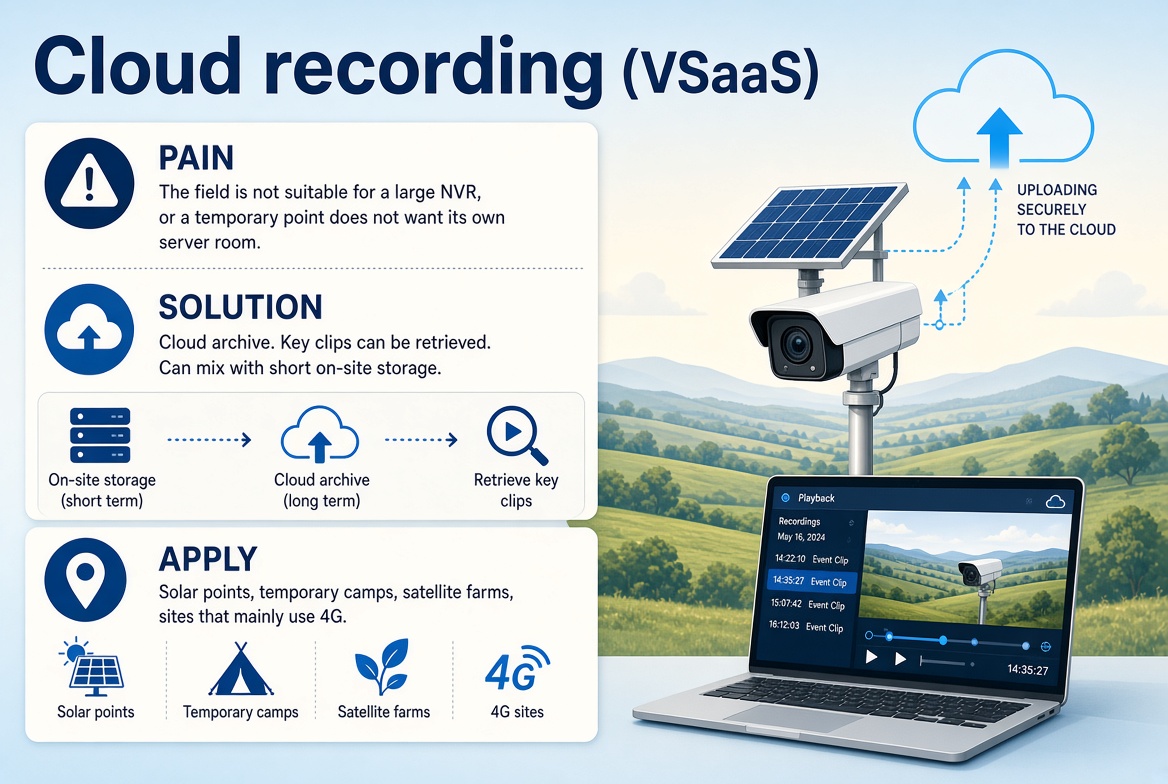
Country parks, reservoirs, farmland, campsites, hiking trails, outdoor fences, and remote work locations often lack stable mains power and fixed network connections. These areas are expansive and desolate after dark. Cameras must continue monitoring fences, visitors, hill fires, or wildlife—and be redeployed once temporary tasks conclude. The system can be configured separately for powered or unpowered sites, as well as wired or LTE connectivity. There is no need to trench the entire site on the first day.
Three Problems These Sites Know Well
Outdoor and remote sites must address challenges related to power supply and network connectivity, nighttime fencing, hill fires, wildlife, and budget constraints—all simultaneously.
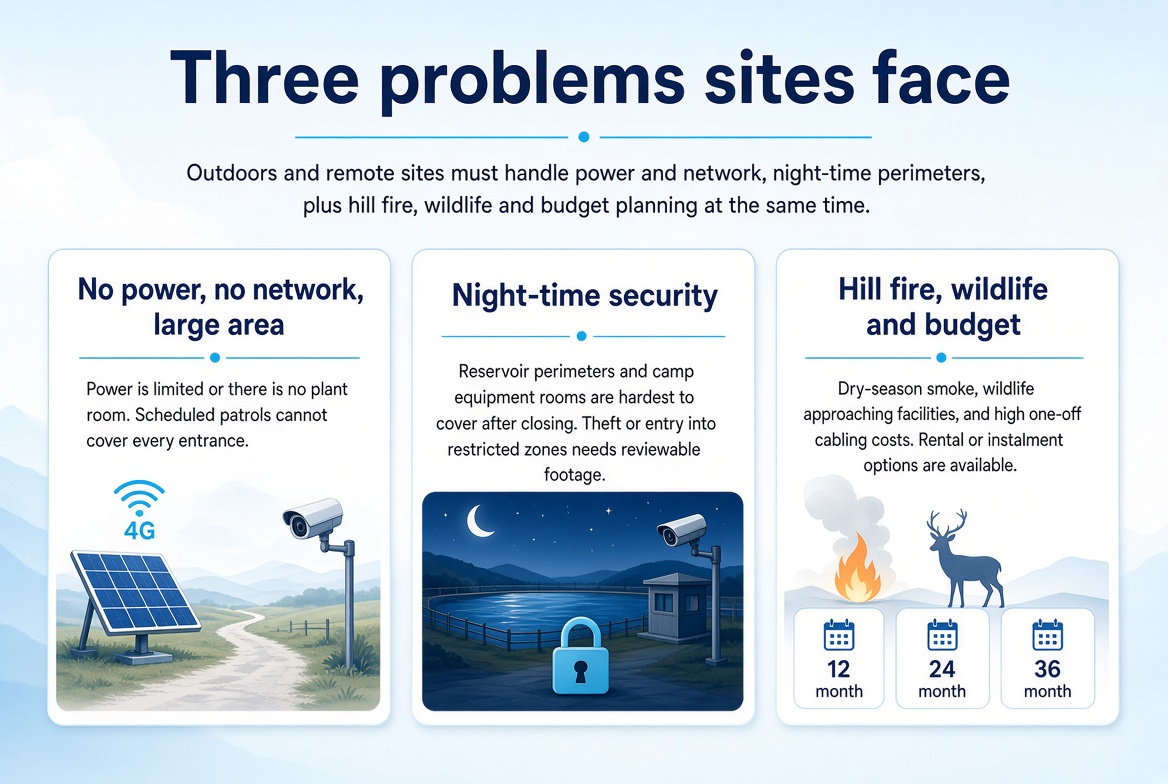
No Power, No Network, and a Large PlotThe mains supply is limited, or there is no plant room at all. Clockwork patrols cannot cover every gate.
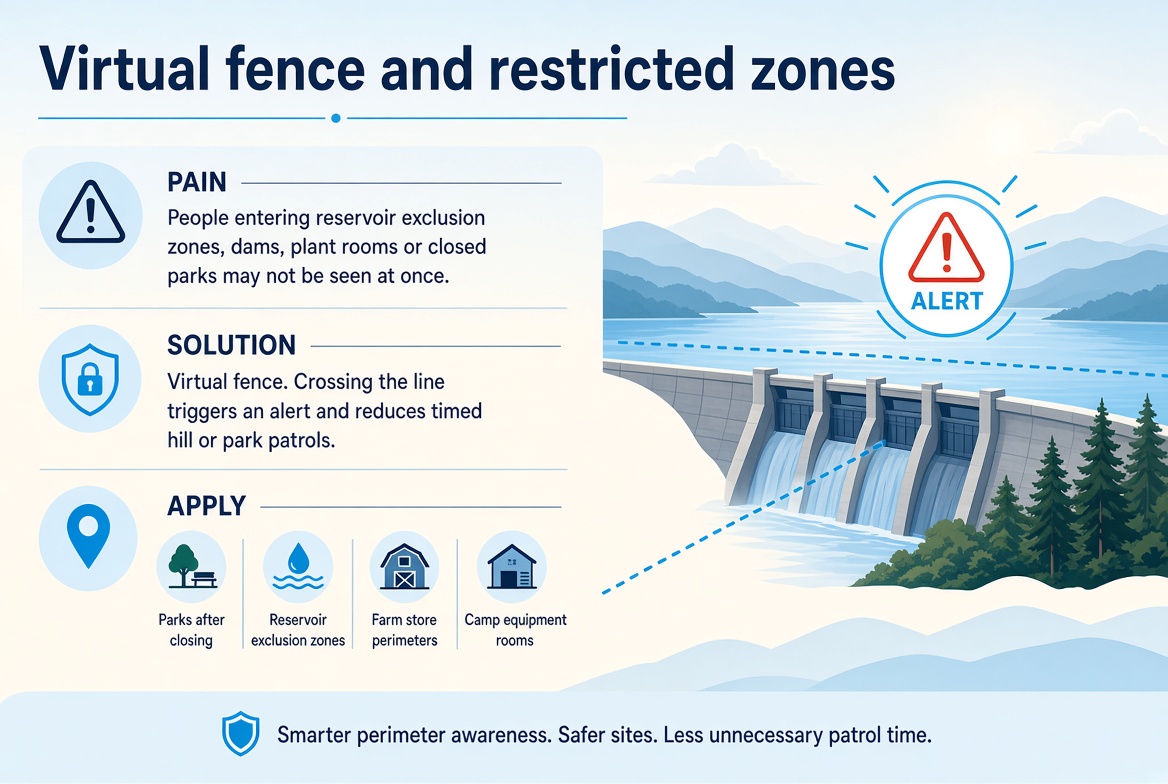
Nighttime Theft and TrespassingFarmland, reservoir fences, and camp stores after closing are the hardest areas to monitor. Theft or entry into a no-go zone requires footage that can be easily located.
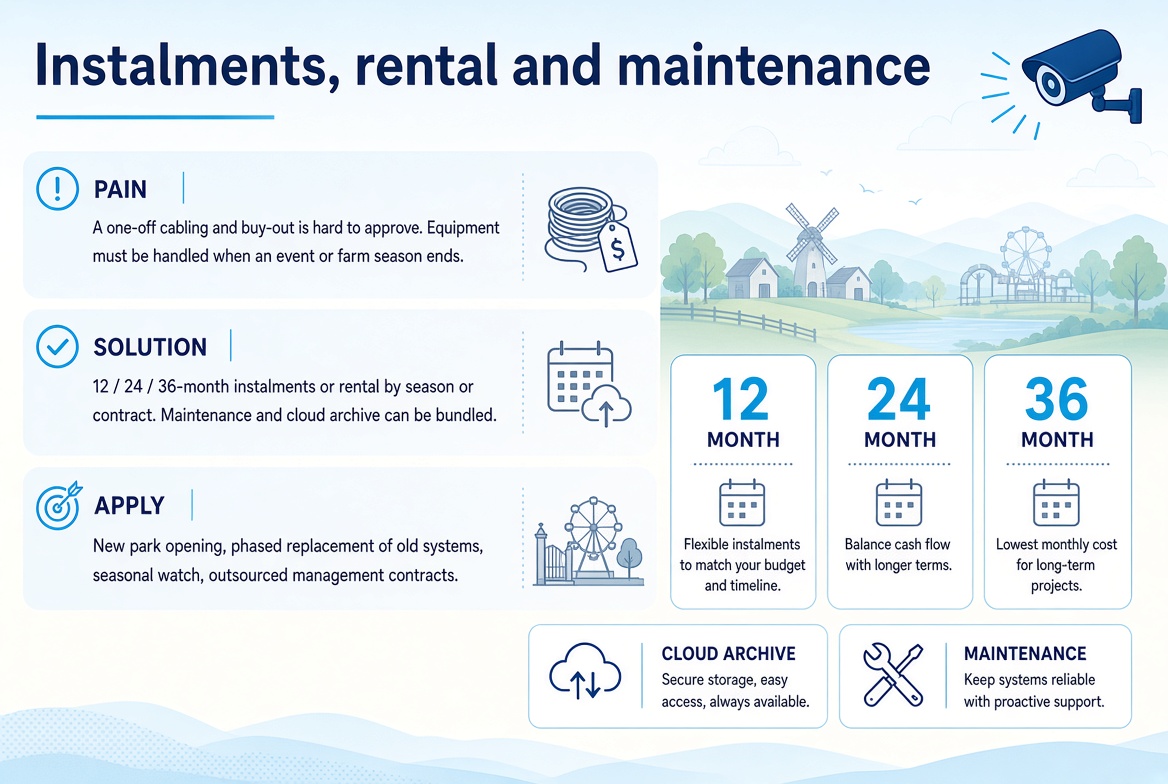
Hill Fires, Wildlife, and the BudgetDry-season smoke, wildlife near the equipment, and a one-time trenching bill. The annual budget is often not yet approved, so the system must be rentable, portable, and payable in installments.
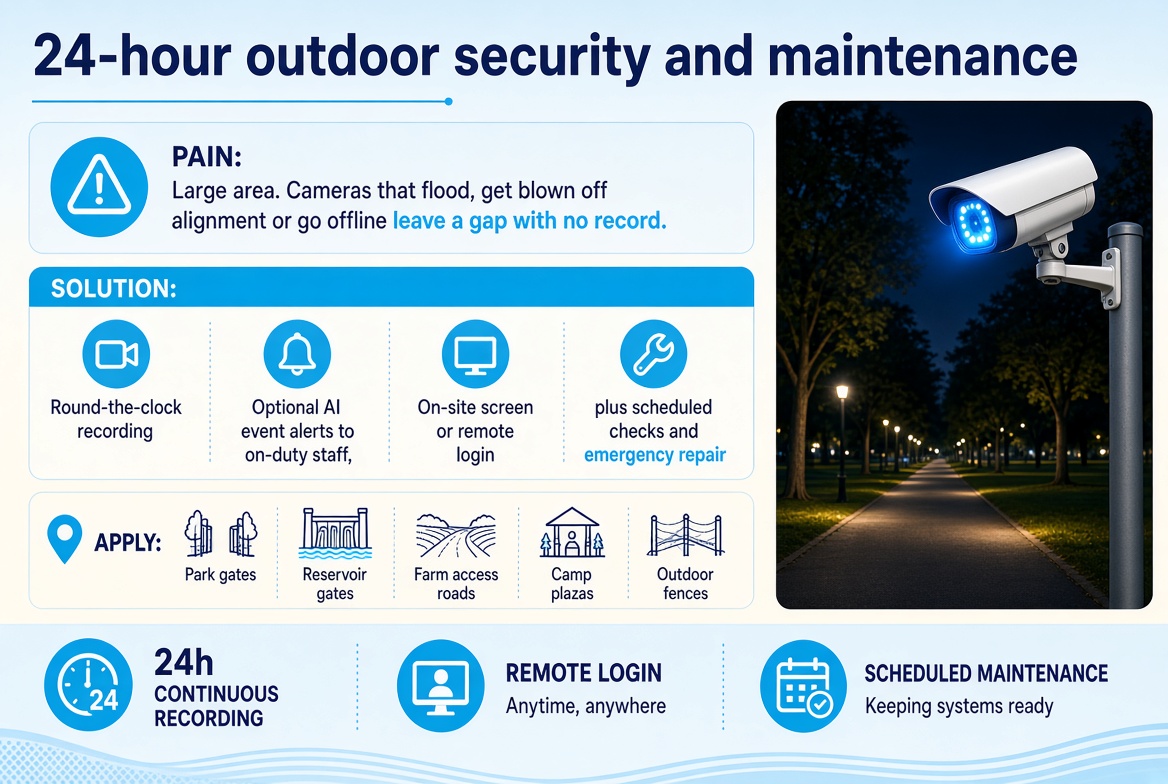
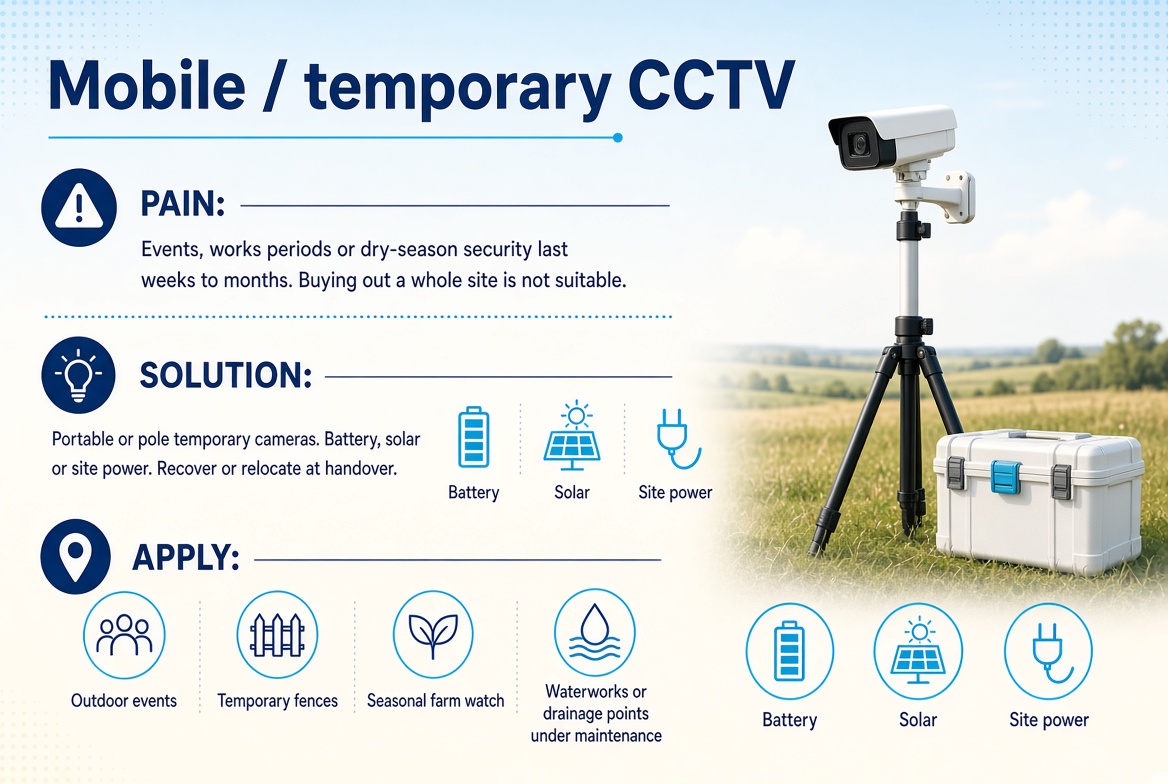
One Outdoor Security Stack
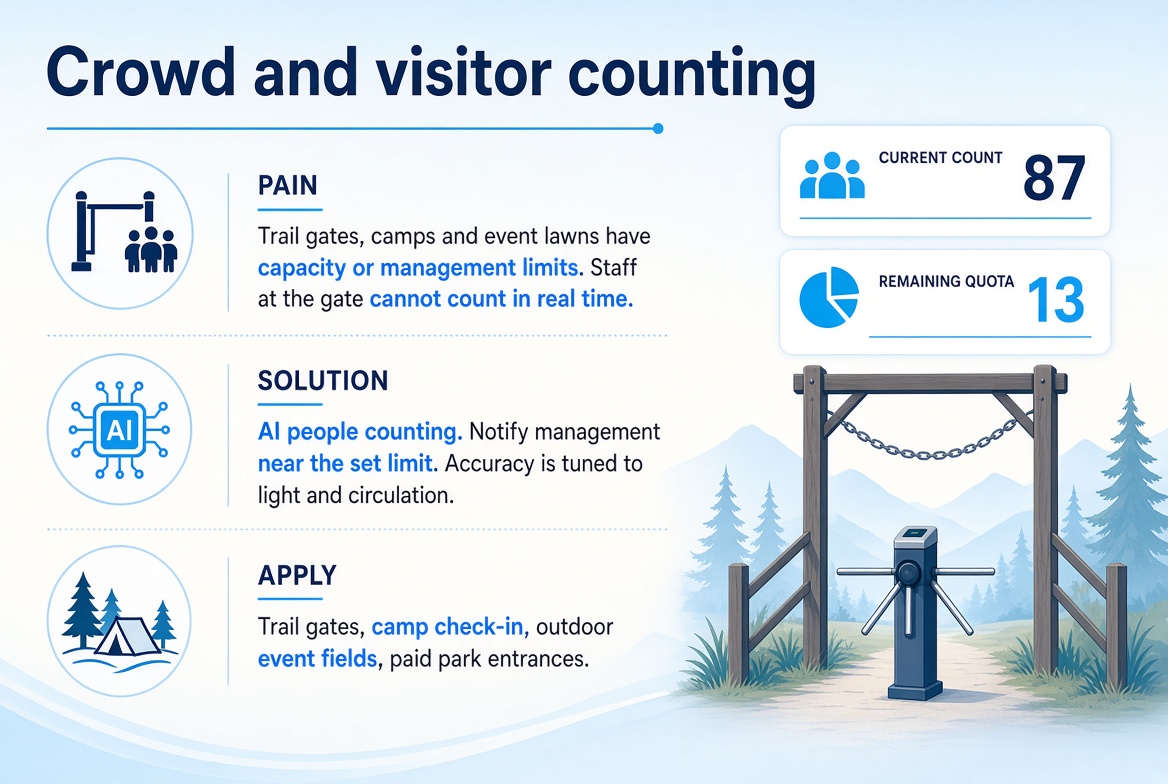
Gates, fences, reservoir dams, farm boundaries, camp plazas, and remote work sites.
Sites We Can Name
Outdoor and remote projects where our systems are already installed, or that we may list publicly. Contract terms and site rules apply.
| Site | Photo |
|---|---|
| AFCD Tap Mun marine pontoon |
 |
| Sham Wan Restricted Area, Lamma Island |
 |
| Siu Lang Shui Hong Kong Satellite Positioning Reference Station |  |
| Kadoorie Farm and Botanic Garden |  |
Why Choose This Outdoor Package?
☀️ Designed Around On-Site Power
Powered/unpowered and wired/LTE are specified separately; they are not copied from an indoor job.
🦅 Switch Functions On One by One
Animals, hill fires, fences, and headcounts are included only where necessary.
📡 Temporary Points Can Be Redeployed
Move the kit when the event or farming season ends to prevent it from sitting idle.
🔗 Use the Cameras You Already Have
Existing outdoor cameras can often connect to the cloud or a VMS.
💳 Installments or Rental for the Season
12, 24, or 36 months, or aligned with the contract.
🛠️ One Team After Handover
Installation, tuning, maintenance, and emergency repairs are handled by the same team.
How the Process Works
Free Site Survey
Power, network, coverage, and nighttime risks.
Design the Mix
Solar, LTE, thermal, or recording only.
Install Around the Weather
Avoid peak opening hours and periods of bad weather.
Train and Go Live
App, alarm flow, battery, and signal check.
Stay on the Job
Clean the lenses, check the battery and solar panel, and adjust the fence.
Questions Asked at Outdoor Sites
If a country park or reservoir is equipped with cameras, how is visitor privacy protected?
Cameras are installed on gates, fences, and around shared facilities. They should not be directed toward tent interiors or changing rooms. We advise on audio or silent recording by zone and can assist with public notices.
No mains power—does that always mean solar energy?
It depends on the sun exposure, tree cover, and the number of hours you need to record. Some locations can rotate batteries or connect to a nearby plant room. We provide separate quotes for these options after the survey.
What should I do if the LTE signal is poor?
Use a short local loop combined with timed uploads, or relocate the point and add an antenna. A site that remains weak should retain a local loop.
Will animal AI continue to mistake a branch for a bird?
We tune it on-site and can add a human verification step. Accuracy decreases at night and in heavy fog; thermal imaging can provide additional support.
What happens to the kit when a temporary event concludes?
Rented points will be returned, while purchased points can be transferred to the next site. This information is stated in the quote.
Does thermal imaging replace the fire services system?
No. Video and thermal systems serve as additional alerts and recording tools. Statutory fire equipment must still independently comply with the site code.
Enquire About Outdoor and Remote Sites
For solar wireless systems, temporary cameras, animal detection, or hill-fire support, we offer on-site assessments free of charge. Please provide the site type, indicate whether mains power or a network is available, and specify the area you need to monitor.


