Exhibitions · concerts · markets · openings
CCTV for temporary and short-run events
Exhibitions, concerts, fairs, openings and outdoor events usually sit on a hired hall and a short build. When the show ends the kit has to come back. Cameras belong on gates, aisles, backstage doors and equipment bays — so you can check who came in, see the crowd and keep that day’s file. Changing rooms, backstage rest rooms and toilets should not have cameras.
Three things a short booking has to solve
A short-run site still has to handle the build window, the live crowd, and what happens when there is no plant room and the kit has to come back.
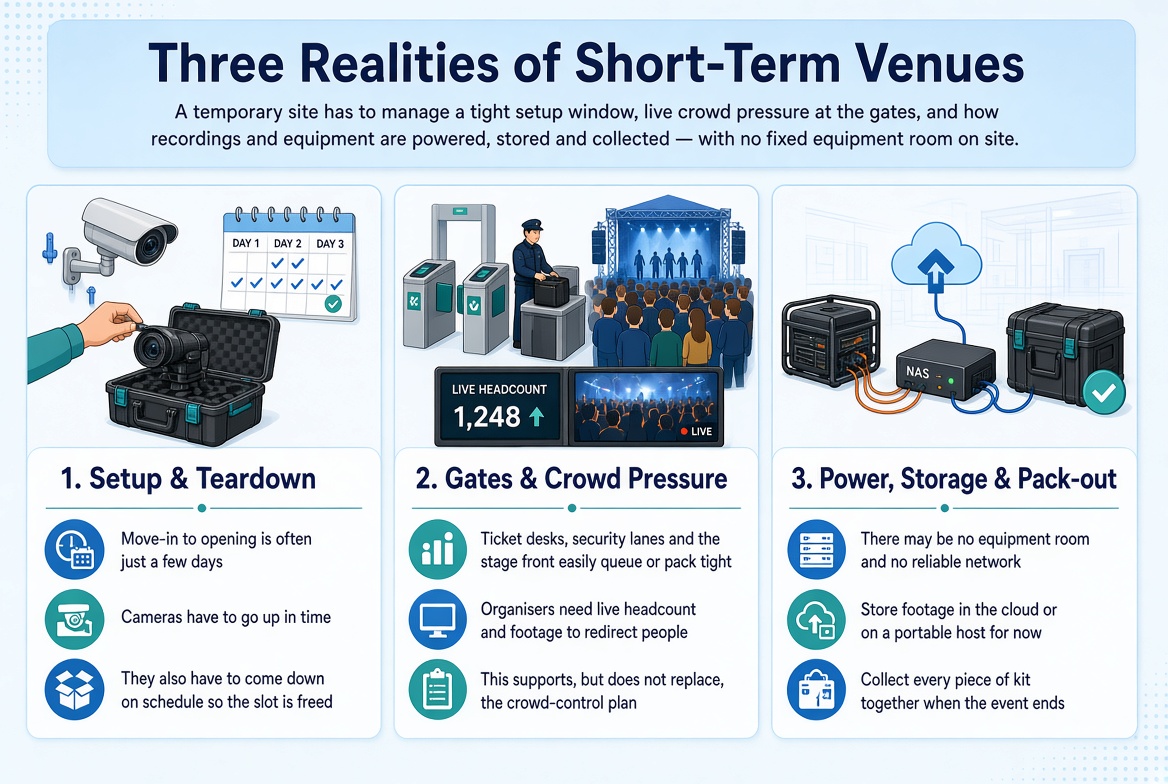
1. Build and strike
Load-in to opening is often only a few days. Cameras have to go up in time, and come down on schedule after the show, so they do not eat the next booking.
2. Gates and crowds
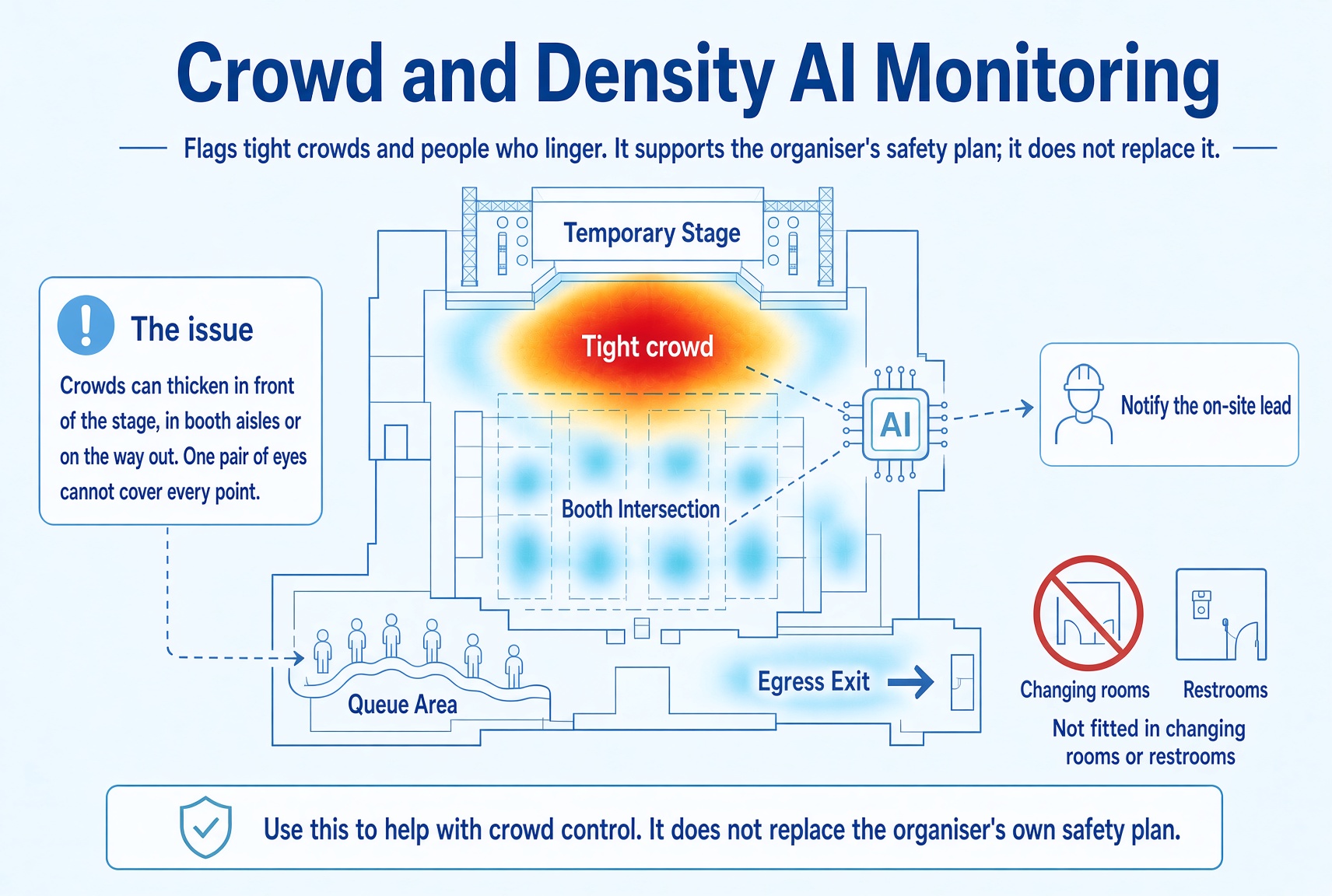
Ticket desks, security lanes and the front of stage queue or pack tight. The organiser needs a live count and a clip for floor control. This does not replace the event’s own crowd plan.
3. Temporary power and archive
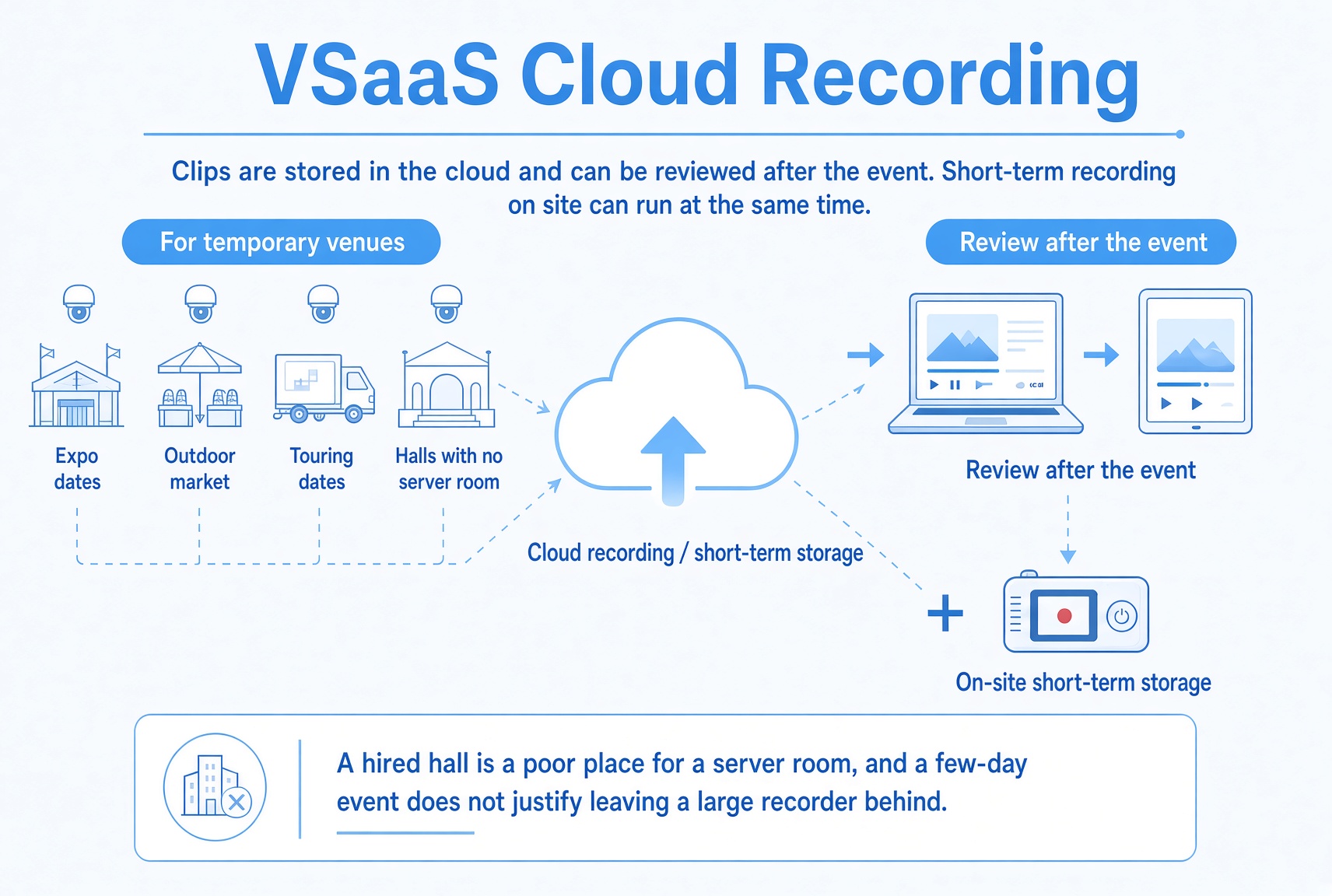
The hall may have no plant room and no stable network. Recording should live in the cloud or on a movable NVR, and leave with the kit when the show ends.
One event stack
Temporary ground at exhibitions, concerts, fairs, carnivals, openings, press conferences and meeting halls.
📦 Short-term CCTV rental
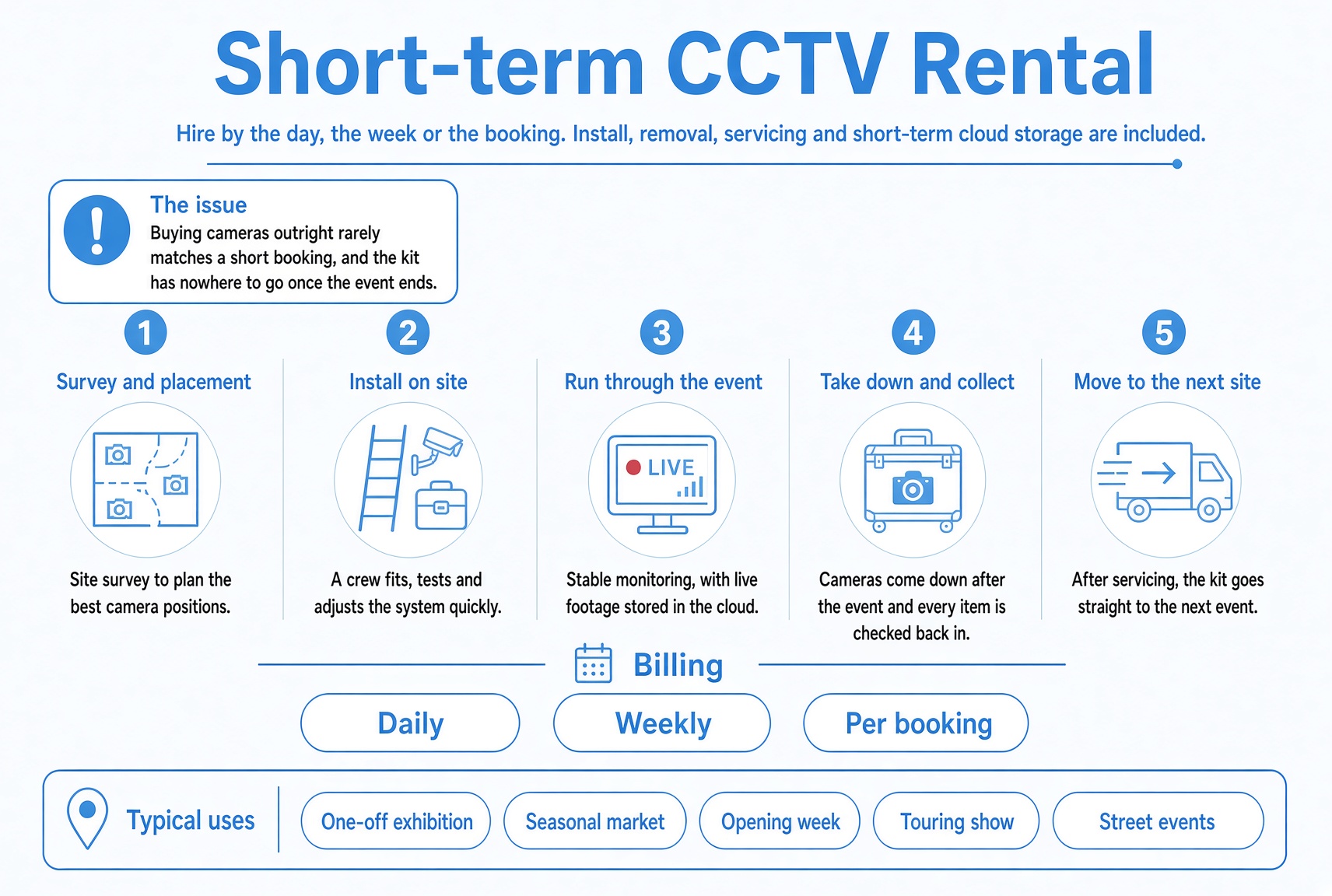 Pain: A one-off buy does not match the booking. When the show ends the kit has nowhere to go.
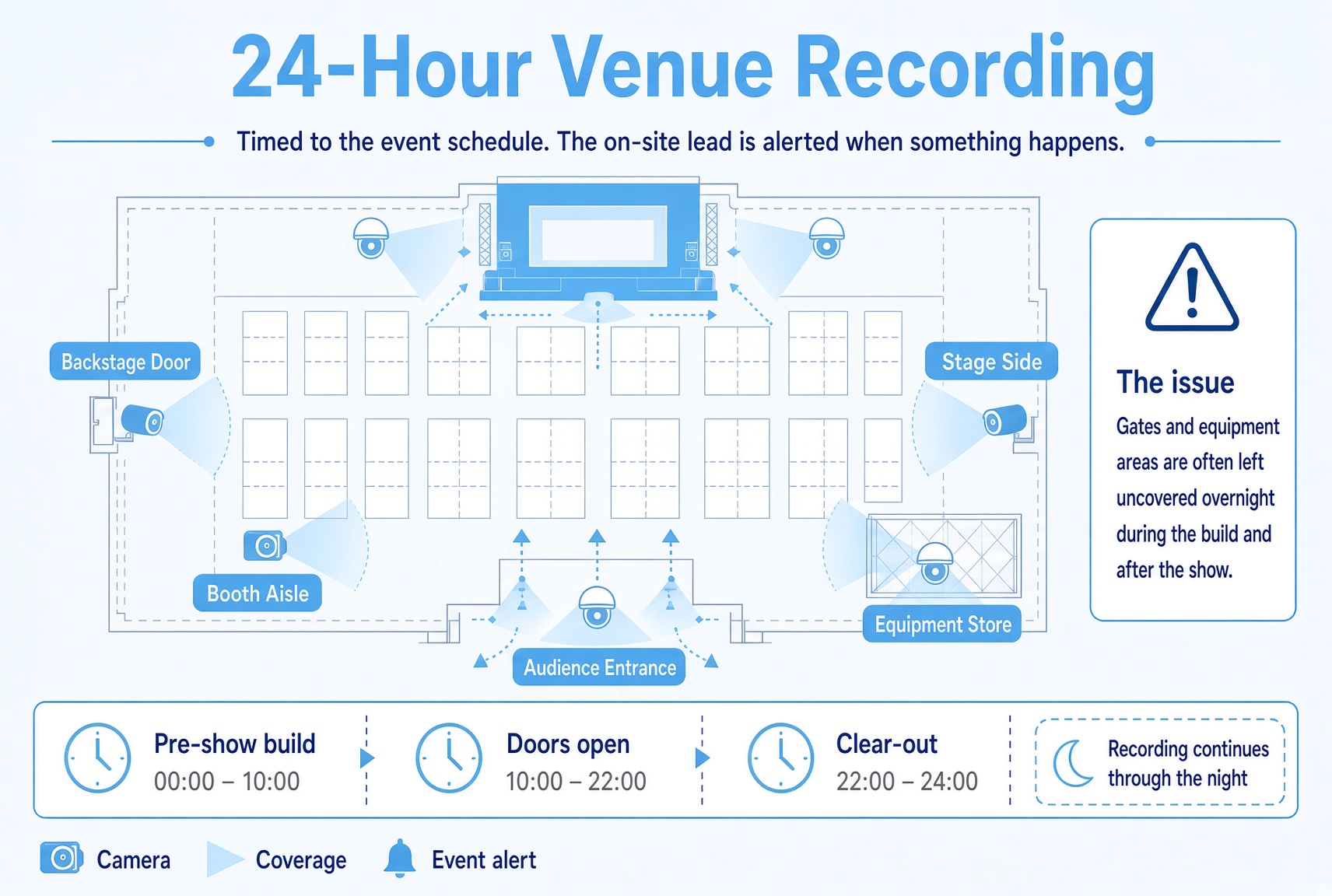
📹 24-hour site recording
🛠️ Emergency repair during the Event
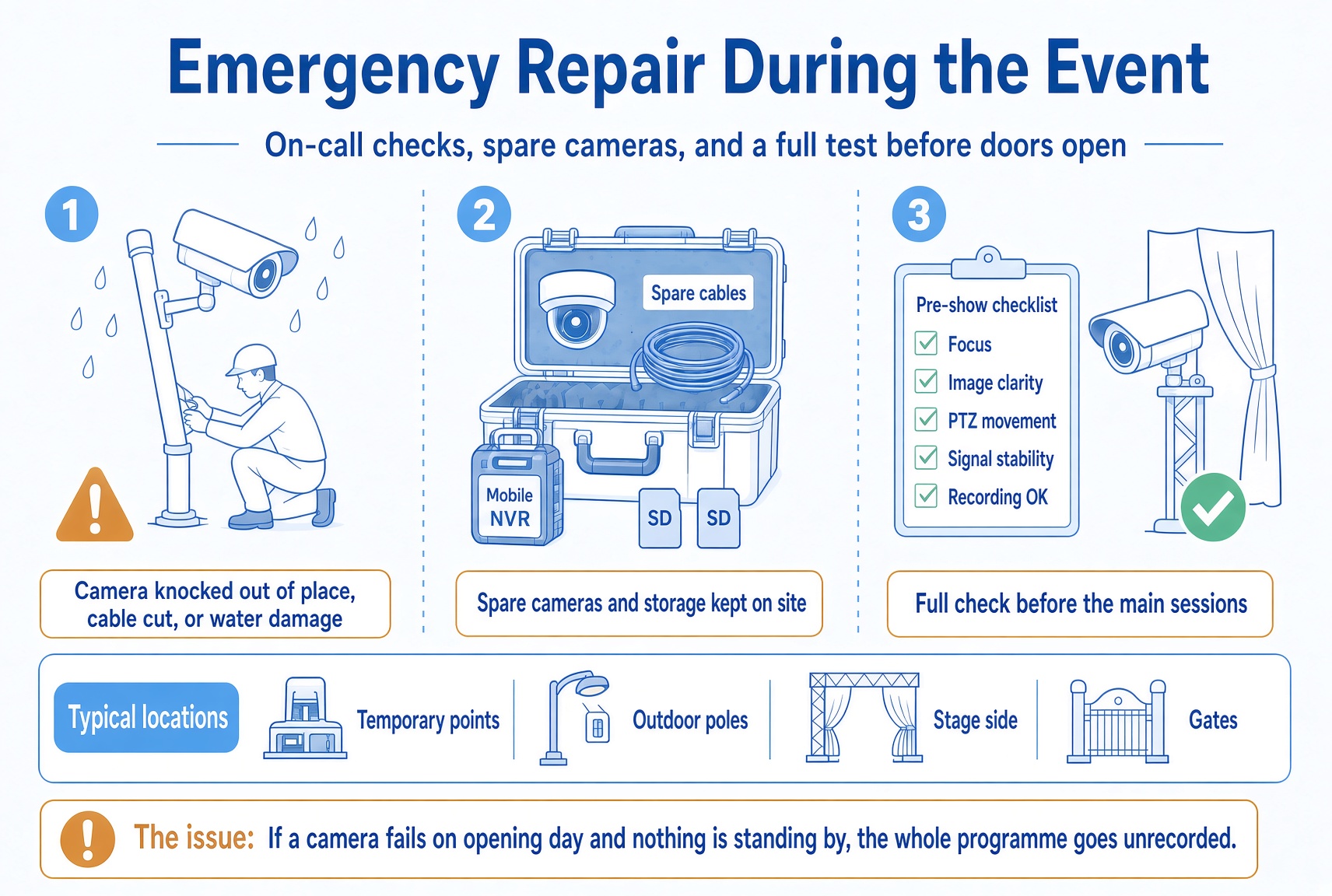 Pain: Opening day a camera is knocked, drops offline or floods. No spare on site — a whole set has no picture.
👥 Headcount
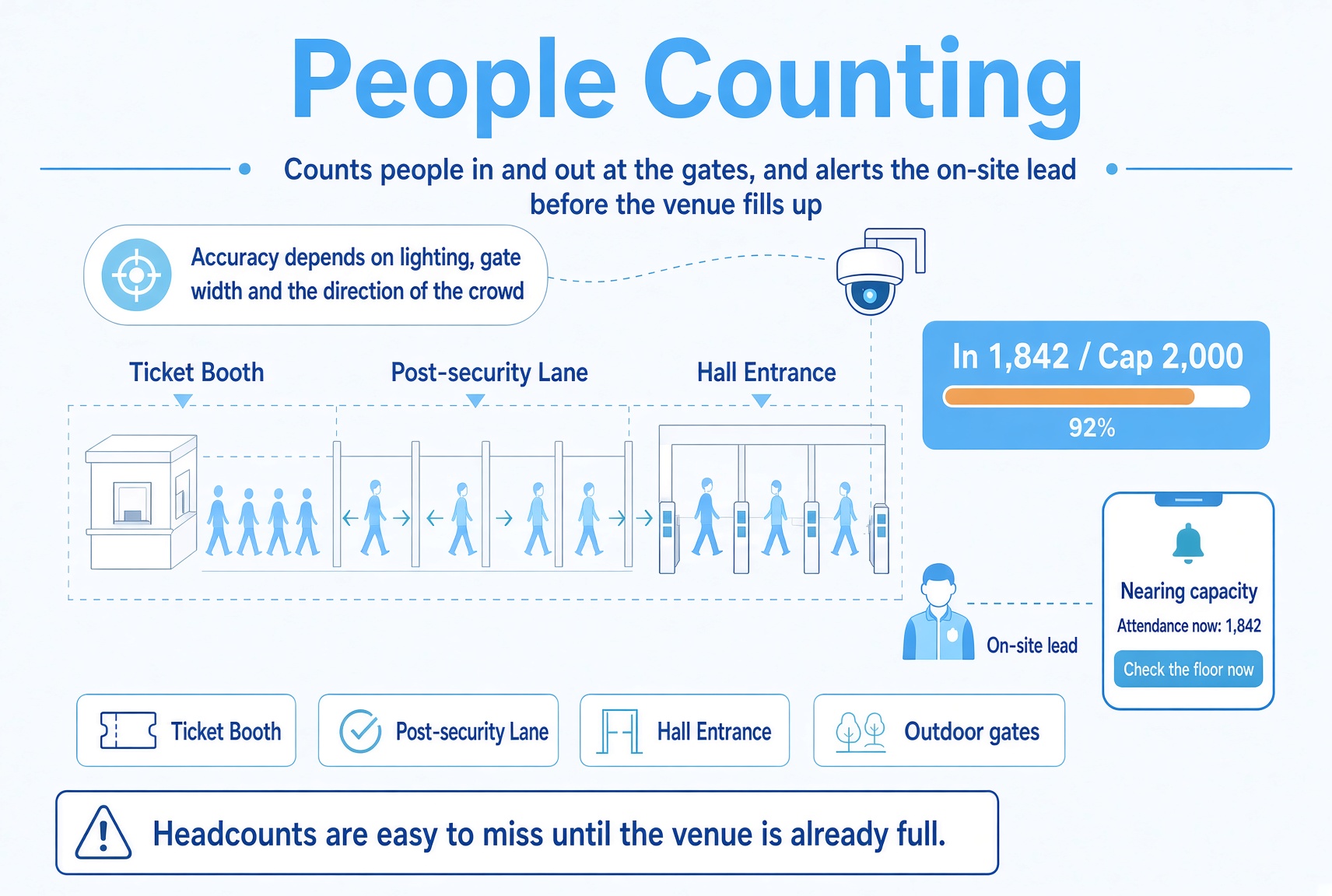
⚠️ Crowd AI
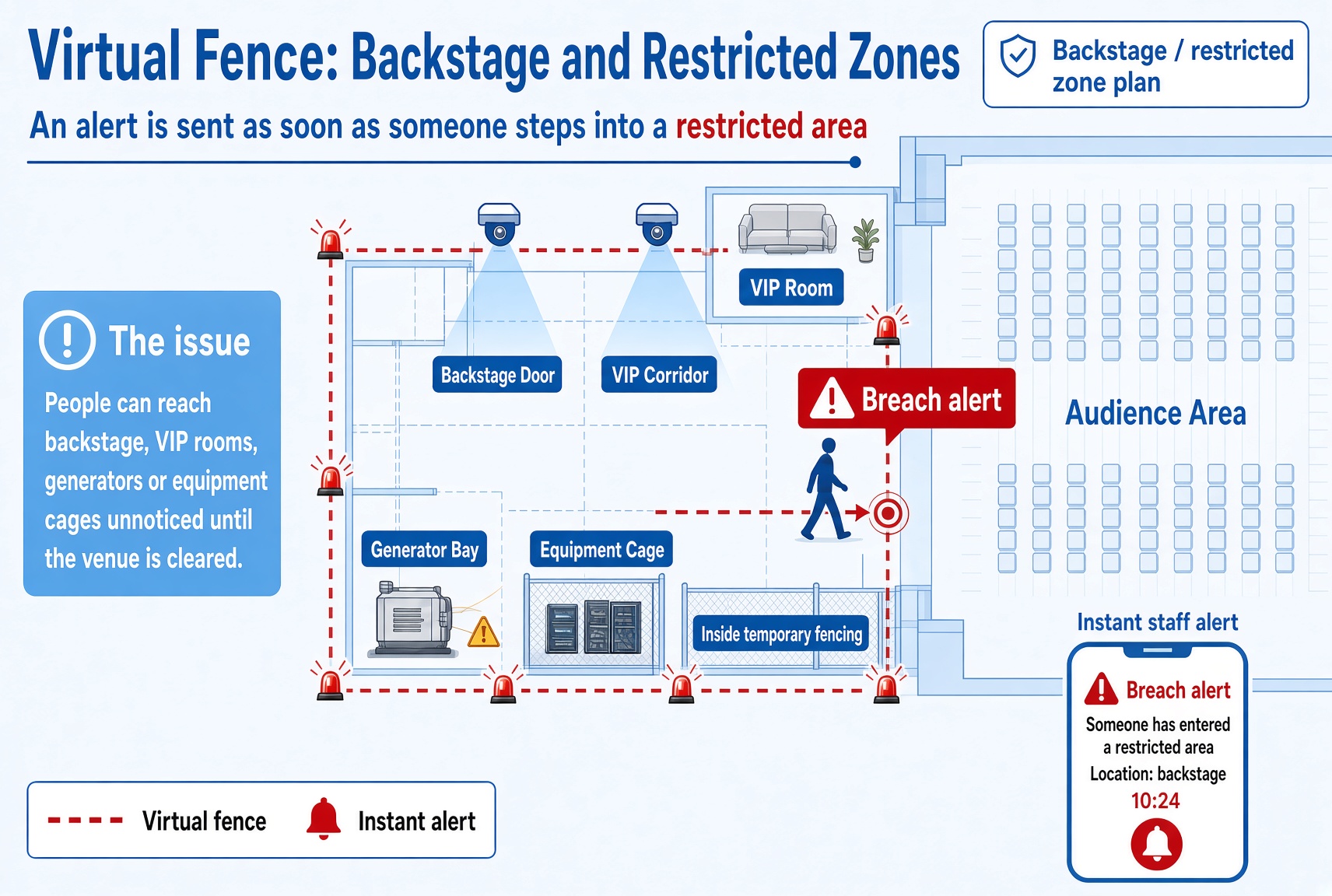
🚧 Virtual fence: backstage and restricted ground
☁️ VSaaS cloud recording
Events we can name
| Site | Photo |
|---|---|
| Lunar New Year Fair |  |
| Jewellery exhibition |  |
| Brand activation |  |
| Temporary works site | 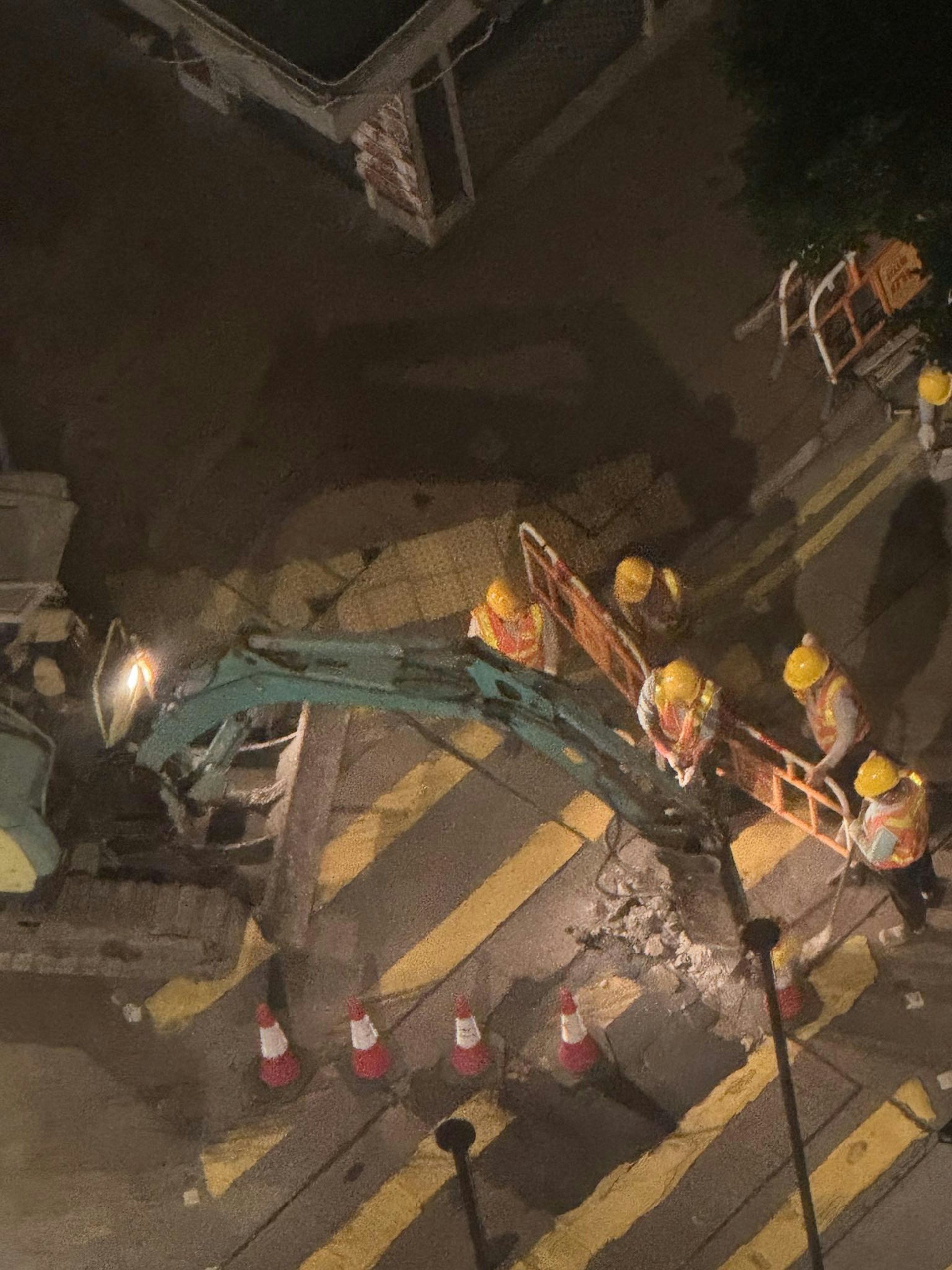 |
Why one team plans it
Timed to the booking
Install, cover and strike follow load-in and load-out, so the hall is not blocked.
Public ground first
Cameras sit on gates, aisles and backstage doors — not in changing rooms, rest rooms or toilets.
Rental and cloud in one figure
Short-term kit, emergency repair and a short cloud loop stay with the same crew.
Add functions date by date
Start with recording and gate counts, then add crowd watch or restricted-zone alerts if the date needs them.
How the work runs
1. Booking survey
Floor plan, load-in day, doors-open hours and load-out
2. Design the mix
Rental days, gate points, and whether to add crowd watch or cloud archive
3. Install on the build
Fit the build window; walk the system before doors open
4. Support during the run
Remote view and emergency repair
5. Strike after the show
Collect the kit on time and hand over the named clips
Questions organisers ask
If a temporary site has CCTV, how is privacy handled?
Gates, public aisles, backstage doors and equipment bays are the right ground. Changing rooms, backstage rest rooms and toilets should not have cameras. Audio follows the venue and the organiser’s brief.
Can the headcount be used as the legal occupancy figure?
The number is for floor control. Legal or venue occupancy still follows the organiser and the hall rules, and the count is tuned on site.
No fixed power — can we still install?
Some points can use hall power, battery or a wireless uplink. Outdoor sites and halls with no plant room should also look at a short cloud loop.
The show is only two or three days. Will we be asked to buy the kit?
Short bookings are rental. Charged for the dates. Collected after the show.
If a camera fails on opening day, can it be fixed at once?
Emergency repair can be booked for the run. For a headline date, walk the system before doors open and keep a spare.
Can a tour reuse the same kit?
Yes. After one date is struck, the kit can move to the next. Rental days and camera points are quoted to each floor plan.
Book a survey for an exhibition or event
Tell us the event type, the venue, load-in and load-out dates — and whether the first gap is gate headcount, backstage restricted ground, or a full recording file.


