Clinics · community health · day hospitals
CCTV for clinics and community health centres
Outpatient clinics, community health centres, day hospitals and rehab units have to watch doors, waiting corridors, the pharmacy and staff passages at once. Cameras sit on public ground — so you can check who came in and explain what happened later — not inside the consult room.
What the site needs
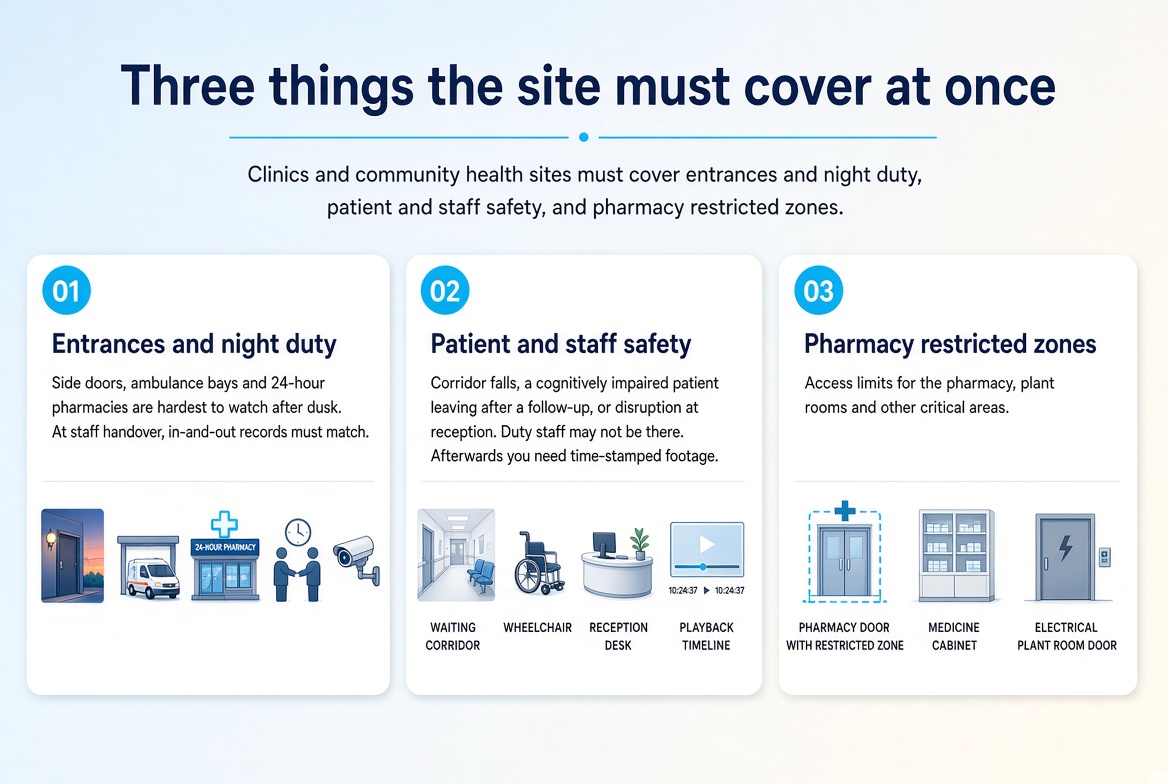
A clinic or community health centre still has to cover doors and night cover, patient and staff safety, and a restricted pharmacy.
1. Doors and night cover
Side doors, ambulance bays and a 24-hour pharmacy are hardest after dusk. At handover, the in-and-out record has to match.
2. Patient and staff safety
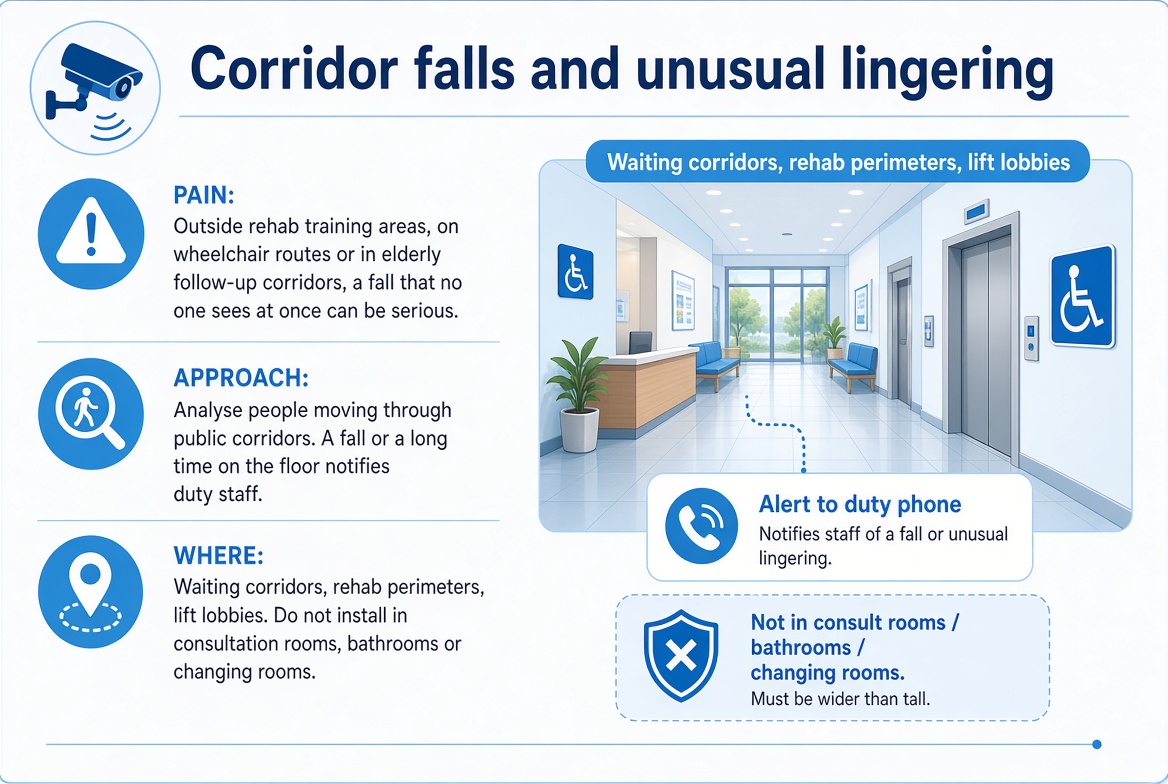
A fall in the corridor, a follow-up patient with dementia leaving, a disturbance at reception. Whoever is on duty is not always there. Afterwards you need a clip you can time.
3. Restricted pharmacy
The pharmacy and plant rooms stay restricted ground.
One site stack
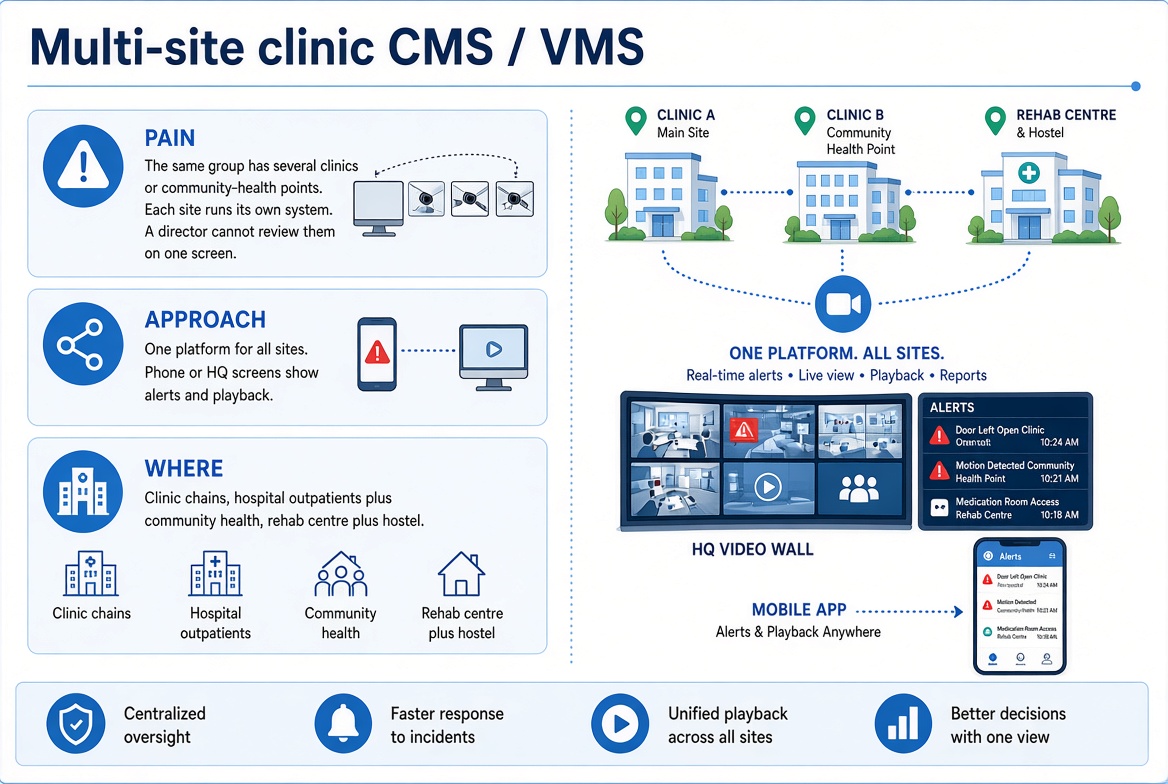
Public ground in clinics, community health centres, day hospitals, rehab centres and 24-hour pharmacies.
Sites we can name
| Organisation / site | Photo |
|---|---|
| Ningxin Animal Medical Centre, Yuen Long |  |
| PAWS and Tails Veterinary Hospital, Sheung Wan | 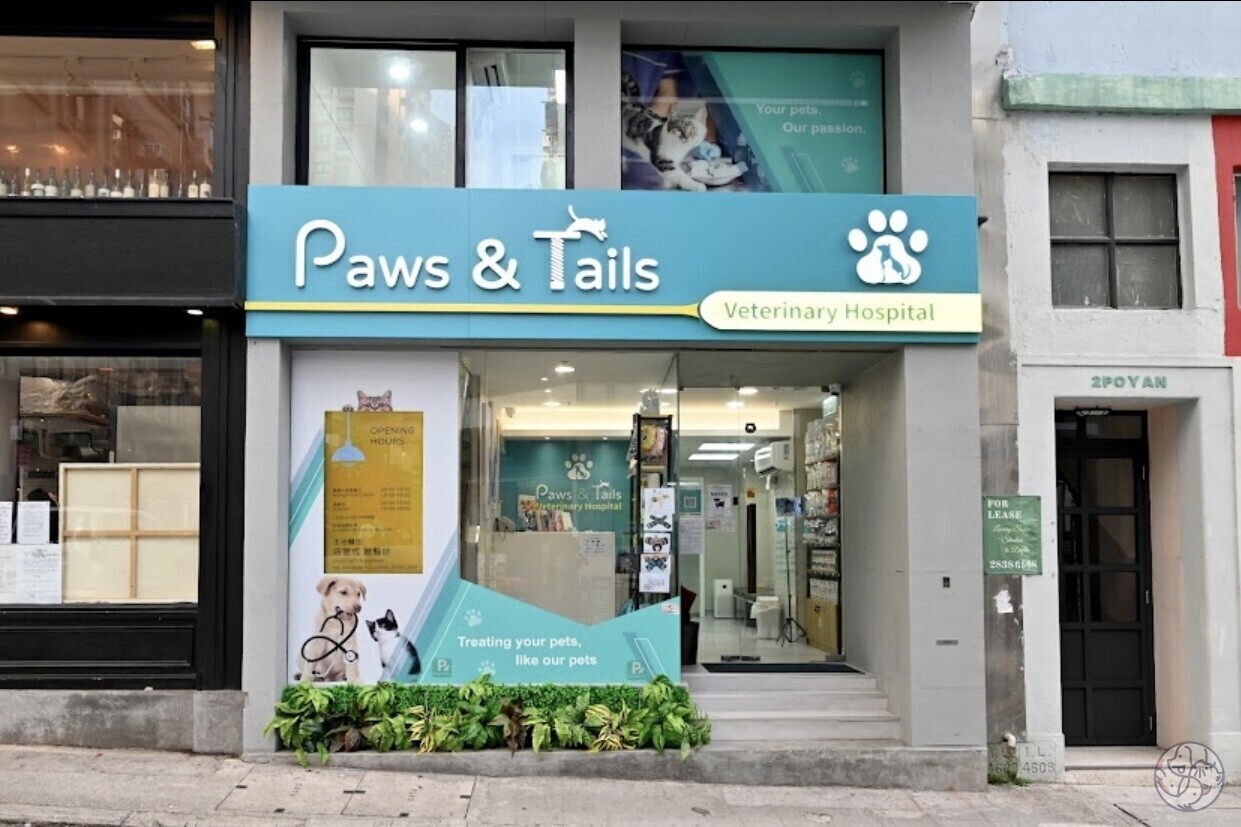 |
| Wing On Pharmacy, Yuen Long | 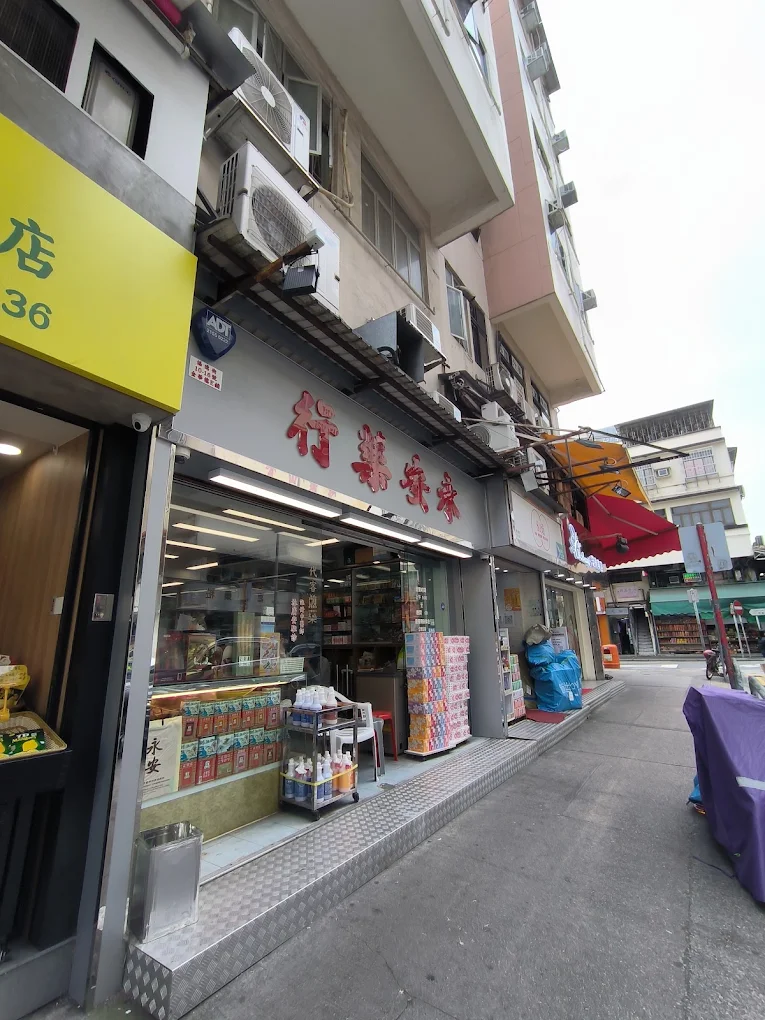 |
Why one team plans it
Public ground first
Cameras sit on doors, waiting areas and around the pharmacy — not in consult rooms or private treatment bays.
Use cameras you already have
We first check whether existing HD units can stay, then add AI and the recorder.
Add AI and cloud later
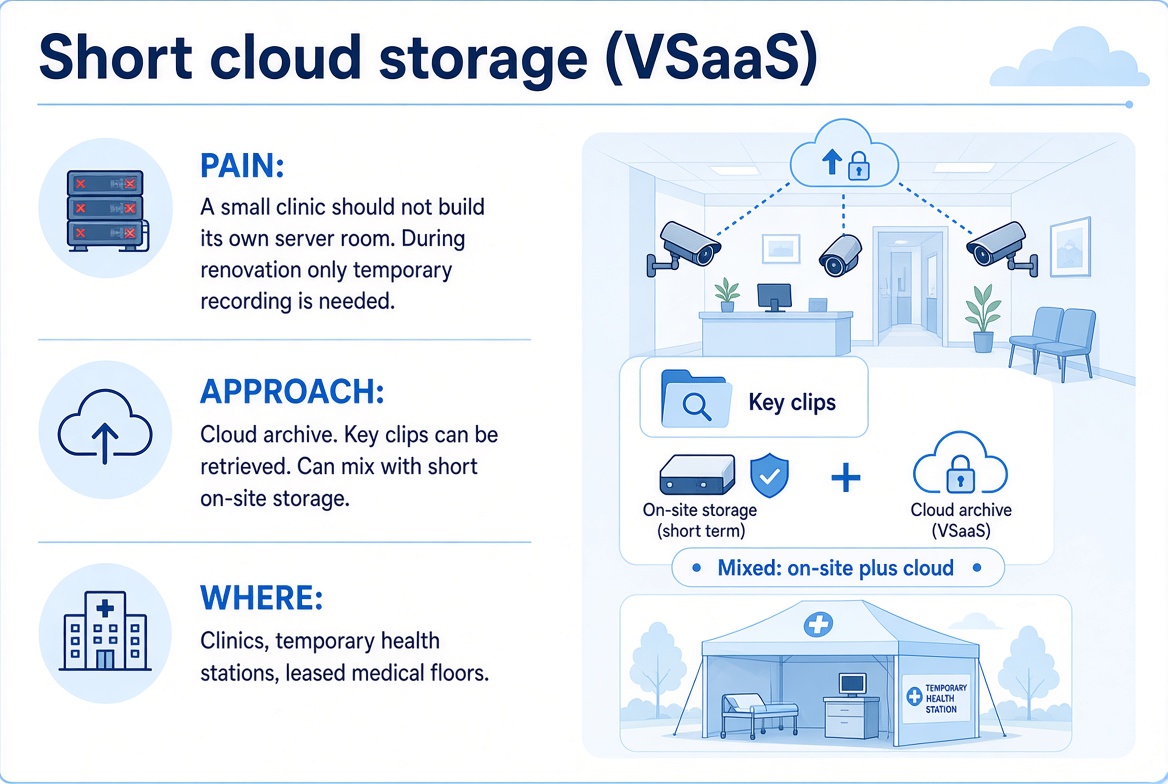
Face list, falls, fence and VSaaS are added only where the site needs them.
Local install and upkeep
Placement, access rights, desk screens and later repair stay with the same crew.
How the work runs
1. Site survey
Flow, opening hours, pharmacy and side doors
2. Design the mix
By zone: recording only, or add face, falls and a fence
3. Install by zone
Avoid clinic peaks and vaccination days
4. Train and go live
Desk / nurse-station rights and a run-through of alerts
5. Stay on the job
Clean lenses, update lists, fine-tune the model
Questions clinics ask
If a clinic has CCTV, how is privacy handled?
Public corridors, doors and around the pharmacy are the right ground. Consult rooms, beside treatment beds, changing rooms and toilets should not have cameras. Audio or silent is advised by zone. We help the organisation write the internal note.
Will fall detection keep false-alarming?
We tune it to corridor width and how wheelchairs and walking aids are used, and can add a human check.
Do we have to replace every old camera?
Not usually. Most jobs start by assessing the HD cameras already there, then covering the side door, pharmacy door and waiting-area blind spots.
Our community health centre is only open in the day. Do we record all night?
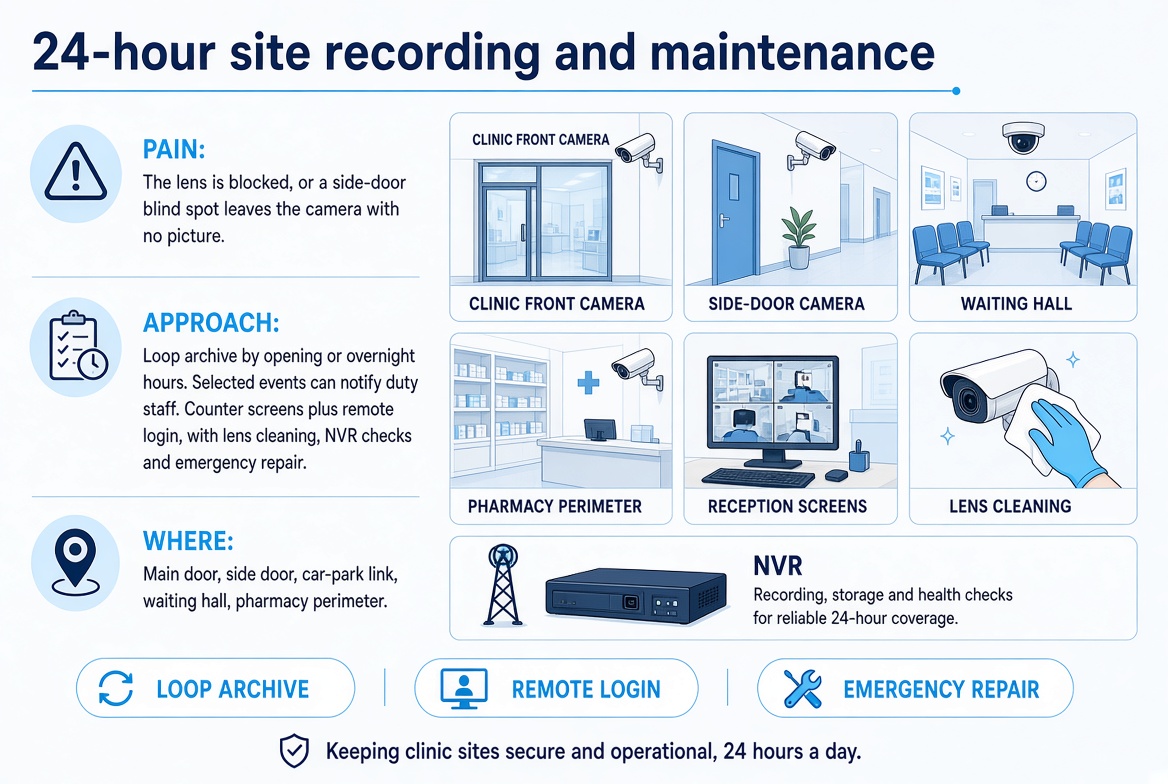
You can record only during opening hours, plus after-close alerts on the side door, on a timetable.
Can we do the pharmacy door and the main door first, and add the corridor later?
Yes. Build in modules: doors and restricted rooms first, then falls or a face list.
Can a small clinic pay in instalments?
Yes. 12 / 24 / 36 months. Detail is written after the survey.
Book a survey for a clinic or community health centre
Tell us whether it is a single clinic, community health or a day hospital — and whether the first gap is the side door, the pharmacy or the waiting corridor.


